
Why Pet Friendly Cleaning Matters for Your Home and Your Pets
Pet friendly cleaning uses non-toxic, safe ingredients to protect your pets from harmful chemicals while effectively maintaining a clean home. The fastest approach combines simple pantry staples like white vinegar and baking soda with proper cleaning techniques—avoiding ammonia, bleach, and phenols that can poison pets.
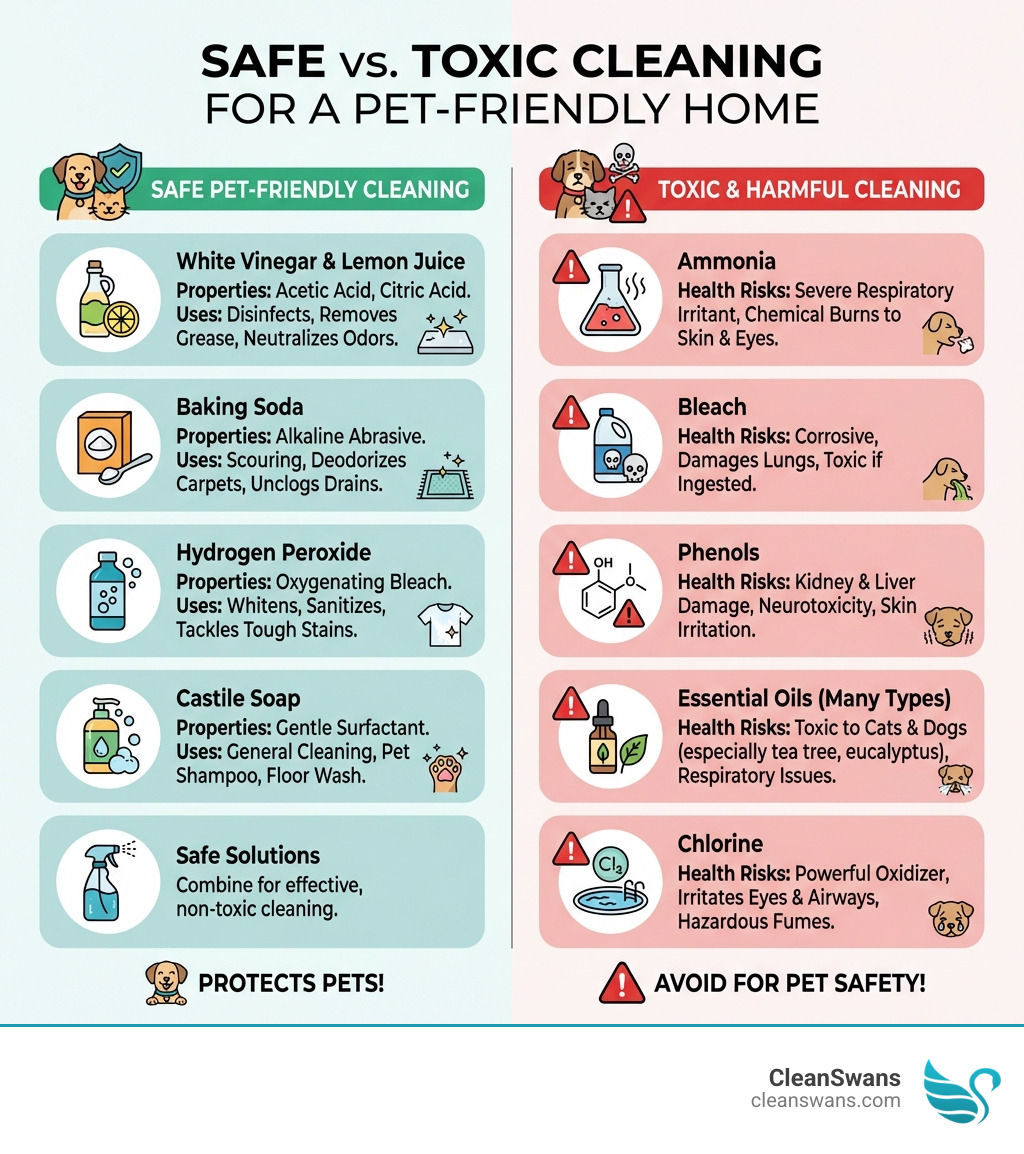
Quick Reference: Safe vs. Toxic Cleaning Ingredients
| Safe for Pets | Toxic to Pets |
|---|---|
| White vinegar | Ammonia |
| Baking soda | Bleach |
| Hydrogen peroxide | Phenols |
| Lemon juice | Tea tree oil |
| Castile soap | Chlorine |
Pets bring joy, but also messes. Many standard household cleaners contain chemicals that can irritate your pet’s skin and respiratory system, or even cause serious illness if ingested. The challenge is finding solutions that work fast without compromising safety. You need to clean floors, carpets, and countertops without worrying that your dog or cat might get sick from the residue or fumes.
The good news? Effective pet friendly cleaning doesn’t require hours of scrubbing or expensive specialty products. Natural ingredients like vinegar and baking soda are proven to clean, deodorize, and tackle tough stains. Vinegar’s acetic acid kills bacteria, while baking soda neutralizes odors and acts as a gentle abrasive. When combined with the right tools, these staples deliver professional results in minutes.
As the Founder of CleanSwans, I’ve developed luxury home care programs that prioritize both pristine environments and pet safety. We’ve refined fast, effective pet-friendly cleaning protocols that maintain white-glove standards without exposing beloved animals to toxic chemicals.
Why Standard Cleaners Are a Hazard to Your Pets
For pet owners, cleaning is about more than just dirt and germs; it’s about ensuring the products we use don’t harm our companions. Pets are vulnerable to toxic chemicals through ingestion, inhalation, or skin contact. They explore with their mouths, walk on freshly cleaned floors, and then groom themselves, which can lead to them ingesting harmful residues.
Fumes from harsh cleaners can also irritate a pet’s sensitive respiratory system. Direct contact with wet cleaning solutions can cause skin irritation. It’s crucial to know which common household cleaning ingredients are safe and which to avoid.
Common Household Chemicals to Avoid
Many popular cleaning products contain ingredients that are highly toxic to pets. Be aware of these to safeguard your furry family members.
- Ammonia: Found in glass and oven cleaners, it can cause severe respiratory irritation and internal damage if ingested.
- Bleach: Fumes can irritate the respiratory system, and ingestion can cause burns in the mouth and esophagus.
- Chlorine: Common in toilet bowl cleaners, it poses similar risks to bleach.
- Phenols: Often in disinfectants, these are very toxic to cats and can cause liver damage.
- Phthalates: Found in scented products and air fresheners, they can disrupt endocrine systems.
- Essential Oils: Many, like tea tree oil, are toxic to pets (especially cats) and can cause liver damage or neurological issues if ingested or inhaled. For more details, consult resources on toxic household cleaning ingredients.
Understanding the Risks to Different Pets
The way pets interact with their environment affects their risk of exposure to cleaning chemicals.
- Cats: As meticulous groomers, they are highly susceptible to ingesting toxic residues from their paws and fur. Phenols are especially dangerous for them.
- Dogs: Their constant floor-level activity and paw-licking put them at risk of ingesting harmful chemicals.
- Birds: Their delicate respiratory systems make them extremely sensitive to fumes from any cleaning product.
- Small Mammals: Hamsters, rabbits, and other small pets are also vulnerable due to their size and habits.
To maximize safety, apply cleaning products to a cloth rather than spraying them near pets, and always ensure surfaces are dry before allowing pets back into the area. For comprehensive cleaning that prioritizes pet safety, explore more info about our home cleaning services.
The Building Blocks of Safe Cleaning: Pet-Friendly Ingredients
DIY pet-safe cleaning solutions offer numerous benefits. You have complete control over the ingredients, ensuring they are truly pet-friendly. They are also cost-effective, using common pantry staples that are cheaper than commercial cleaners. Plus, these natural ingredients are often just as powerful as their chemical counterparts without the associated risks.
The Power of Your Pantry
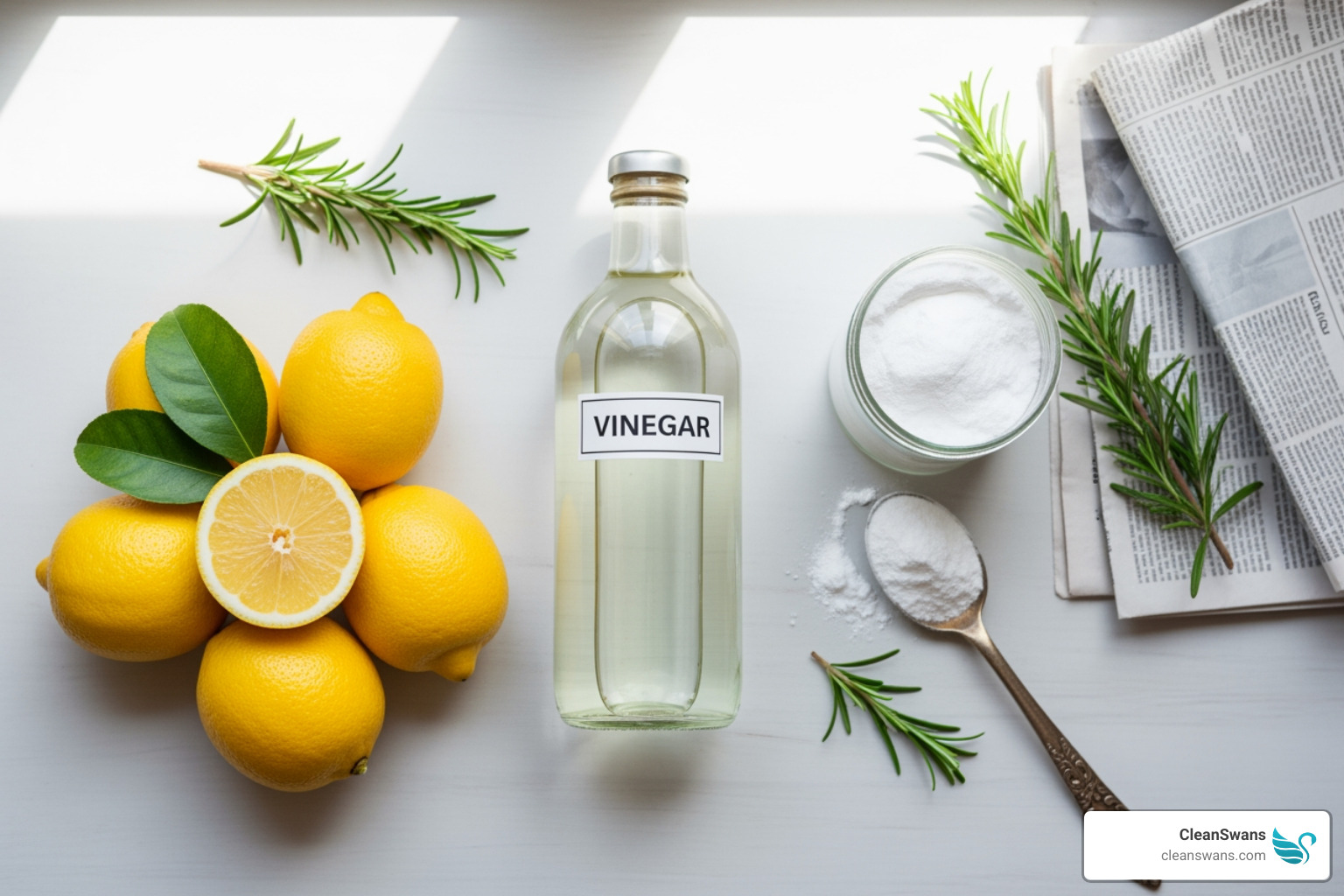
Your kitchen pantry holds a secret arsenal of powerful, pet-safe cleaning agents that can tackle most household messes without posing a threat to your pets.
- Vinegar: A great all-purpose cleaner and disinfectant due to its acetic acid content. It neutralizes odors and cuts through grease and grime. The smell dissipates once dry. Use white distilled vinegar or apple cider vinegar.
- Baking Soda: Baking soda is a fantastic odor absorber and a mild abrasive for scrubbing surfaces without scratching.
- Lemon Juice: Its citric acid is antibacterial and great for cutting through grease and soap scum.
- Hydrogen Peroxide: A mild, oxygen-based bleach, hydrogen peroxide is excellent for stain removal and disinfection. It breaks down into harmless water and oxygen.
- Castile Soap: A gentle, non-toxic, and biodegradable soap made from vegetable oils, perfect as a base for many DIY cleaners.
Cleaning vs. Disinfecting: What’s the Difference?
It’s vital to understand the distinction between cleaning and disinfecting for a healthy home.
- Cleaning physically removes dirt and some germs from surfaces, usually with soap and water.
- Disinfecting uses chemicals to kill germs and pathogens.
Clean pet bowls after every meal, and wash bedding and toys weekly. Disinfecting is necessary for areas contaminated with feces or urine, or if a pet is sick. While vinegar is a great cleaner, for true disinfection, the CDC recommends specific products. You can find more guidance on the CDC’s website about cleaning pet supplies.
Your DIY Pet Friendly Cleaning Toolkit: Recipes for Every Mess
Equipping yourself with the right tools and recipes makes pet friendly cleaning efficient and effective. Your essential DIY toolkit should include:
- Spray bottles for mixing and applying solutions.
- Microfiber cloths for streak-free cleaning.
- Scrub brushes for tough grime.
- A vacuum cleaner for hair and dry messes.
- Paper towels or old cloths for blotting spills.
All-Purpose and Glass Cleaner Recipes
These simple recipes cover most daily cleaning needs.
All-Purpose Cleaner:
Mix equal parts white vinegar and water in a spray bottle. This is great for countertops, sinks, and hard floors. For a fresh scent, infuse the vinegar with citrus peels for 24 hours before mixing. The vinegar smell fades as it dries.
Glass Cleaner:
Mix equal parts vinegar (or lemon juice) and water in a spray bottle. Spray on glass and mirrors, then wipe with a microfiber cloth for a streak-free shine.
Effective pet friendly cleaning for specific messes
Pet-specific messes like urine, vomit, and fur require targeted approaches for thorough cleaning and odor elimination.
For Pet Accidents (Urine, Vomit, Feces):
- Blot, Don’t Rub: Immediately blot wet messes with paper towels to absorb as much as possible. Scoop up solids first.
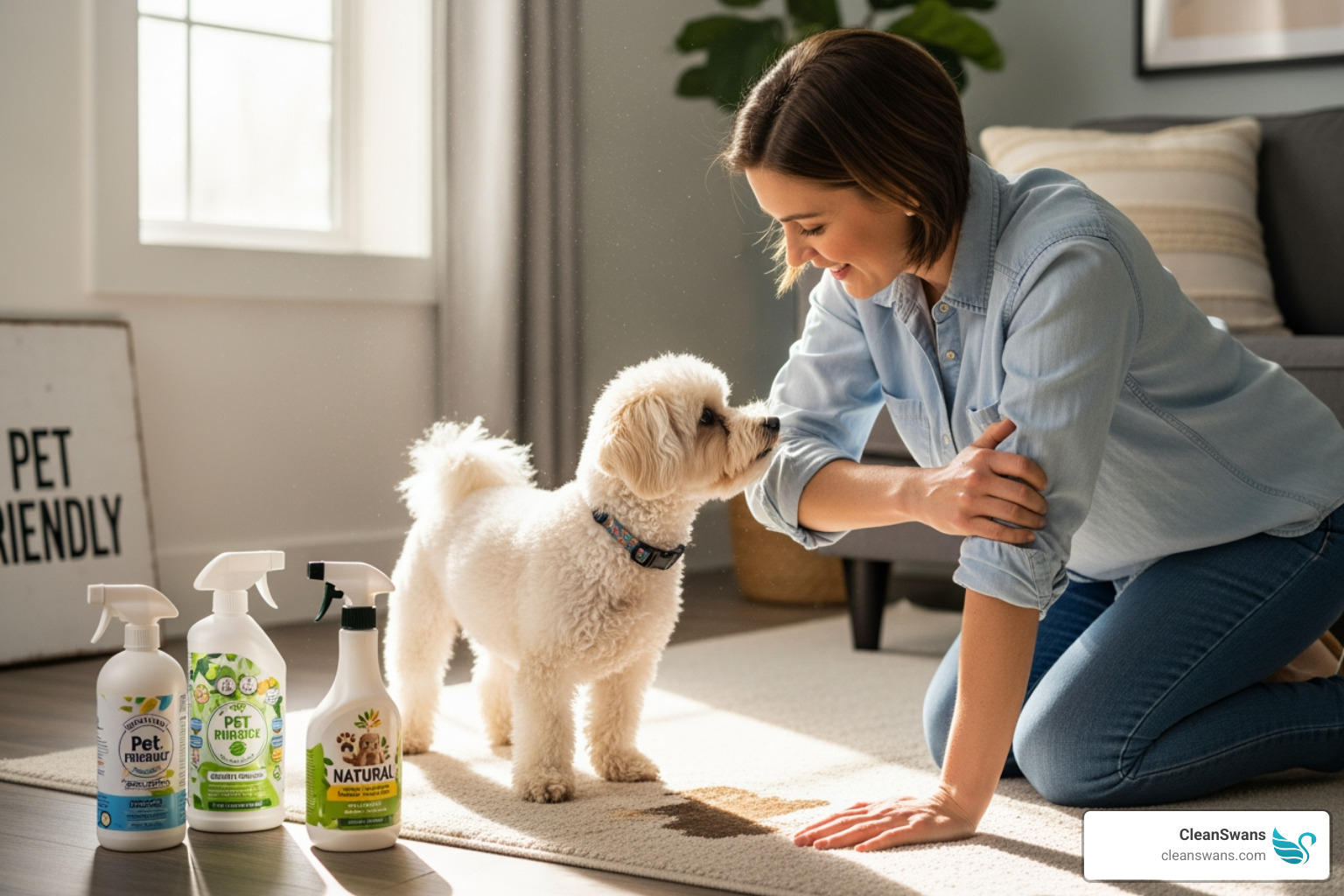
- Clean with a Pet-Safe Solution: For urine, spray a 1:1 mixture of white vinegar and water and let it sit for a few minutes. For tougher organic stains, a commercial enzymatic cleaner is best. Good options include Biokleen Bac-Out Pet Stain Remover, Nature’s Miracle Stain & Odor Eliminator, or ECOS Pet Stain & Odor Remover.
- Rinse and Extract: Blot the area with a clean, damp cloth, then use a dry cloth to absorb excess moisture.
- Odor Neutralization: Once dry, sprinkle baking soda over the spot. Let it sit for at least 15-20 minutes (or overnight for tough odors), then vacuum it up.
For more intensive cleaning needs, especially after a significant pet accident, explore our Deep Cleaning services.
DIY Stain Removers and Odor Neutralizers
Beyond specific messes, these DIY solutions are excellent for general stain removal and keeping your home smelling fresh.
DIY Stain Remover Paste:
Create a thick paste using baking soda and a small amount of hydrogen peroxide. Apply it to the stain, let it sit for 5-10 minutes, then wipe clean with a damp cloth. Always spot test hydrogen peroxide on an inconspicuous area first, as it has mild bleaching properties.
General Odor Neutralizer:
Baking soda is your best friend. Sprinkle it liberally on carpets, rugs, and pet bedding. Let it sit for at least 15-30 minutes, then vacuum thoroughly. For enclosed spaces, OdoBan Solid Odor Absorbers can trap and absorb odors for up to 90 days.
Essential Tools and Routines for a Spotless Home
Proactive management and consistent routines are key to keeping a home with pets clean and safe. A regular schedule helps prevent the buildup of fur, dander, and odors, making daily cleaning more manageable and reducing the need for harsh chemicals. For more guidance on maintaining everyday cleanliness, refer to our Standard Cleaning services.
Must-Have Cleaning Equipment for Pet Owners
Investing in the right equipment can make all the difference in efficient pet friendly cleaning.
- High-Quality Vacuum with Attachments: Essential for pet hair. Look for models with strong suction and tangle-free brushes. A cordless vacuum is great for quick cleanups.
- Rubber Brooms or Squeegees for Fur: Excellent for gathering pet hair from floors and carpets before vacuuming.
- Washable Mop: A microfiber mop is ideal for hard floors. For chemical-free sanitizing, consider a steam mop like the Shark Steam and Scrub.
- Air Purifier with HEPA Filter: Captures dander and allergens while an activated carbon filter helps neutralize odors.
- Steam Cleaner: Deep cleans carpets and upholstery using only water, effectively lifting dirt and odors.
A Simple Schedule for Pet-Related Chores
Consistency is key to a clean and pet-friendly home. Here’s a suggested schedule:
| Item/Task | Frequency |
|---|---|
| Pet food and water bowls | After every wet food meal; daily for dry food and water |
| Pet beds, blankets, and habitats | Weekly |
| Pet toys | Monthly (or more often if heavily used/soiled) |
| Cat litter boxes (scooping) | Daily |
| Cat litter boxes (disinfecting) | As often as a toilet or bathroom (e.g., weekly or bi-weekly) |
| Regular vacuuming (pet hair areas) | 2-3 times a week, or daily for heavy shedders |
| Mopping hard floors | 2-3 times a week |
| Deep cleaning carpets with a pet-safe cleaner | Every 1-2 months, or as needed for spills/stains |
| Grooming (brushing) | Daily or every few days, depending on breed and shedding |
| Wiping paws (after outdoor activity) | Every time your pet comes inside |
Decoding Labels: How to Choose Safe Commercial Cleaners
When you need the convenience of a commercial product, it’s crucial to identify genuinely pet-safe options. Read ingredient lists carefully and be wary of “greenwashing”—marketing terms like “natural” or “plant-based” that don’t guarantee safety for pets. When in doubt, err on the side of caution.
How to Identify Genuinely Pet-Safe Products
The criteria for identifying pet-safe cleaning products go beyond just avoiding obvious toxins. We look for specific certifications and characteristics:
- EPA Safer Choice Label: This label signifies that every ingredient has met strict safety standards for both people and pets, as outlined by the EPA.
- Cruelty-Free Certifications: Brands committed to not testing on animals often have safer formulations.
- Fragrance-Free Options: Artificial fragrances can contain irritating chemicals. Opt for fragrance-free or naturally scented products.
- Key Terms: Look for “non-toxic,” “biodegradable,” and “low-volatility” (low-odor) on the label.
A Guide to Effective pet friendly cleaning Products
When selecting commercial products, focus on those designed with pet safety in mind, especially for specific tasks:
- Enzymatic Cleaners for Organic Stains: Use beneficial bacteria to break down organic stains like urine and vomit. Brands like Biokleen Bac-Out Pet Stain Remover, Nature’s Miracle Stain & Odor Eliminator, or ECOS Pet Stain & Odor Remover are effective.
- Oxygen-Based Cleaners: Products like OdoBan Pet Oxy Stain Remover use oxygen to break down tough stains on carpets and upholstery.
- pH-Neutral Floor Cleaners: For hard floors, a pH-neutral cleaner like OdoBan No Rinse Neutral pH Floor Cleaner is gentle on surfaces and safe for pet paws.
- Pet-Safe Disinfectants: For serious germs, use an EPA-registered disinfectant like KennelSol 1-Step Kennel Cleaner or PureGreen24.
- Pet-Safe Laundry Detergents: Wash pet bedding with detergents free of harsh chemicals and dyes, such as Seventh Generation Free & Clear or ECOS Laundry Detergent.
- Odor Absorbers: Solid absorbers like OdoBan Solid Odor Absorbers can be placed in pet areas for continuous odor control.
- Pest Repellents: If pests are an issue, look for pet-safe options that use natural ingredients like Wondercide Flea, Tick, & Mosquito Spray.
Frequently Asked Questions about Pet Safe Cleaning
How often should I deep clean carpets with pets?
Vacuum high-traffic areas 2-3 times a week, or daily if you have heavy shedders. Deep clean with a carpet washer or steam cleaner every 1-2 months to remove trapped fur, dander, and allergens. Always spot-clean accidents immediately to prevent stains and odors from setting.
Is vinegar a safe and effective disinfectant for pet homes?
Vinegar is a safe and effective cleaner and deodorizer for pet homes, great for general-purpose cleaning. Its acetic acid cuts grease and neutralizes odors. However, it is not a hospital-grade disinfectant. While it kills some bacteria, the CDC recommends an EPA-registered, pet-safe disinfectant for areas that need true sanitization, such as after a pet has been sick.
How can I quickly get rid of pet odors before guests arrive?
For a quick refresh before guests arrive:
- Ventilate: Open windows to let fresh air in.
- Deodorize Carpets: Sprinkle baking soda on carpets and upholstery, let it sit for 15-20 minutes, then vacuum thoroughly.
- Wash Bedding: If time allows, wash pet beds and blankets.
- Clean Key Areas: Quickly scoop the litter box or clean any pet cages.
- Use an Air Purifier: Turn on an air purifier with a carbon filter to trap odors.
A quick wipe-down of surfaces and a fast vacuum will also make a big difference.
Conclusion
Creating a clean home that’s also safe for your pets is all about balance. By avoiding harsh chemicals and embracing effective, non-toxic alternatives like vinegar and baking soda, you can tackle any mess without worry. For bigger jobs, look for commercial products with the EPA Safer Choice label to ensure they’re truly pet-friendly.
Combining these safe solutions with a consistent cleaning routine and the right tools—like a good vacuum and air purifier—will keep your home fresh and your pets healthy. Pet friendly cleaning is an act of love. By choosing safe methods, you create a beautiful, healthy haven for your entire family, furry members included. For a truly pristine home without the effort, consider the expert Pet Friendly Cleaning services from CleanSwans, available across New York, New Jersey, Connecticut, Rhode Island, Massachusetts, Delaware, Maryland, Washington D.C. Metro, Virginia, North Carolina, South Carolina, Georgia, and Florida.