
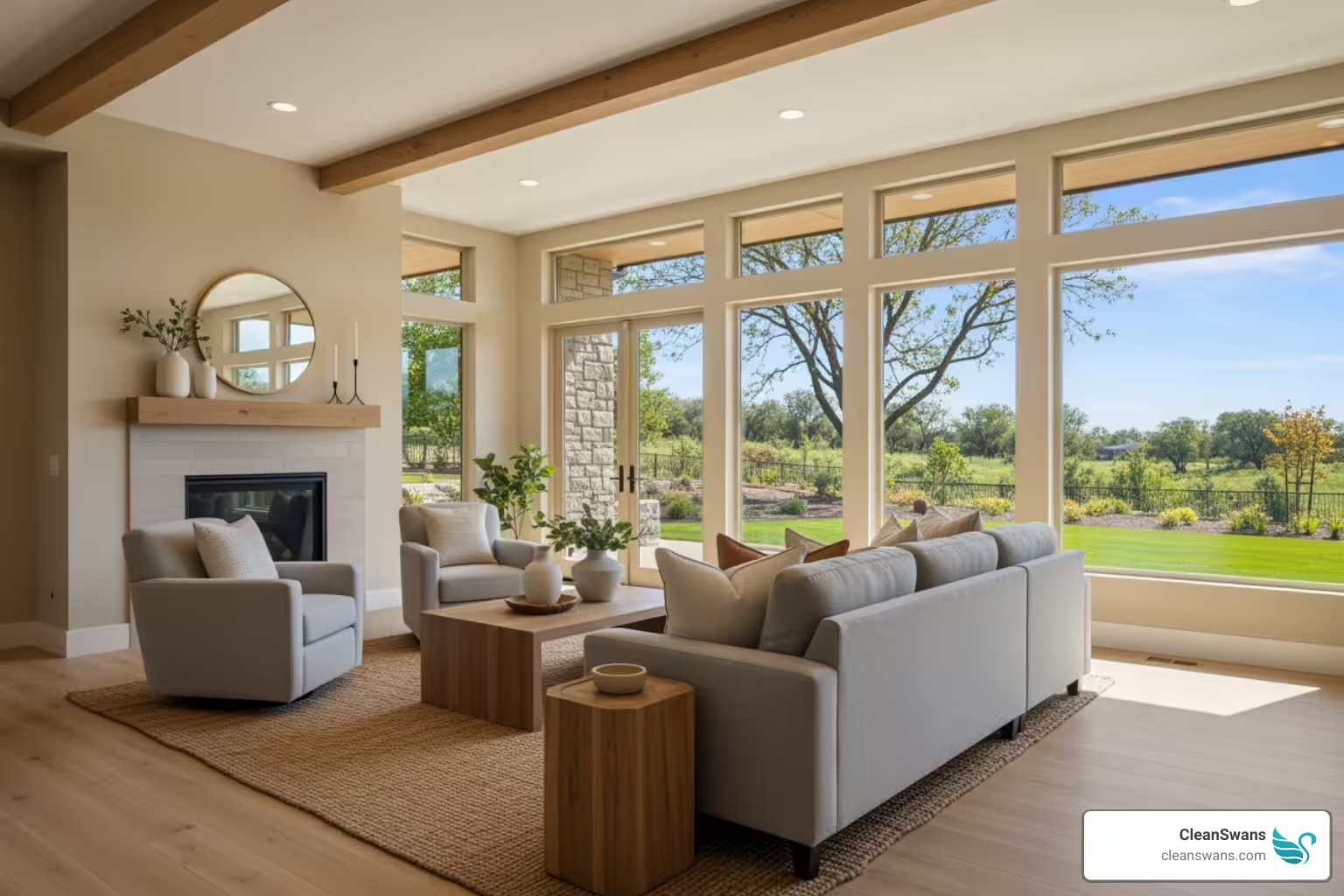
Why Ranch Homes Interior Design Remains a Timeless Investment
Ranch homes interior design focuses on enhancing the open, single-story layouts and indoor-outdoor flow that define this iconic American architectural style. Here’s what you need to know:
Key Elements of Ranch Home Interior Design:
- Open-concept layouts with defined zones using rugs, furniture placement, and subtle dividers
- Light, neutral color palettes (whites, beiges, light grays) to maximize openness and natural light
- Low-profile furniture that complements horizontal lines and maintains sightlines
- Indoor-outdoor connection through large windows, sliding glass doors, and seamless patio transitions
- Natural materials like wood, stone, and textured fabrics that honor the home’s casual, organic roots
- Strategic updates to add architectural interest (exposed beams, built-ins, modernized fixtures)
Ranch-style homes exploded in popularity during the postwar boom of the 1950s and 60s, accounting for nine out of ten new houses built in 1955. Over 1.65 million ranch homes were constructed that year alone, offering affordable, accessible living for a growing middle class. These single-story homes featured long, low-pitched rooflines, open floor plans, and large windows that blurred the line between indoors and outdoors—a radical departure from the closed-off rooms of earlier architectural styles.
Today, ranch homes are experiencing a resurgence. Empty-nesters appreciate the aging-in-place accessibility of single-story living. Young families value the open layouts and large backyards. Designers are refinding how these homes serve as a blank canvas for everything from mid-century modern to contemporary farmhouse aesthetics.
The challenge? Many ranch homes still carry the weight of dated design choices—wall-to-wall carpeting, dark wood paneling, small windows, and eight-foot ceilings that can feel oppressive. The opportunity? These architectural “limitations” are actually invitations for creative design solutions that improve flow, maximize natural light, and blend vintage charm with modern comfort.
As Founder of CleanSwans, I’ve worked with affluent homeowners to maintain and lift ranch homes interior design across primary and secondary residences, focusing on preserving architectural character while implementing modern, low-maintenance solutions. My experience with high-end residential care has shown that thoughtful design choices—from material selection to spatial planning—dramatically impact both daily livability and long-term property value.
Understanding the Ranch Home Canvas: History, Architecture, and Potential
Ranch homes, often referred to as “ranchers,” represent a unique chapter in American architectural history. Their widespread appeal and distinctive characteristics make them a fascinating subject for ranch homes interior design.
A Brief History and Origin
The story of the ranch house begins in the 1930s, with early designs drafted by architects like Cliff Mae and William Wurster. However, their true moment in the sun arrived after World War II. America faced a significant housing crisis as veterans returned home, seeking affordable, comfortable living spaces. The ranch home emerged as the perfect solution, quickly becoming a fixture in suburban landscapes across the U.S.
By the 1950s, the ranch house was the most ubiquitous residential housing type. In 1955 alone, over 1.65 million houses were built, with ranch homes accounting for a staggering nine out of ten new constructions. This style reflected postwar optimism, the aspiration of suburban family life, and, as Sunset Magazine put it in 1946, a way of living that was “informal yet gracious.” It offered families a fresh, accessible take on the American dream, emphasizing open spaces and a connection to the outdoors.
Defining Architectural Characteristics
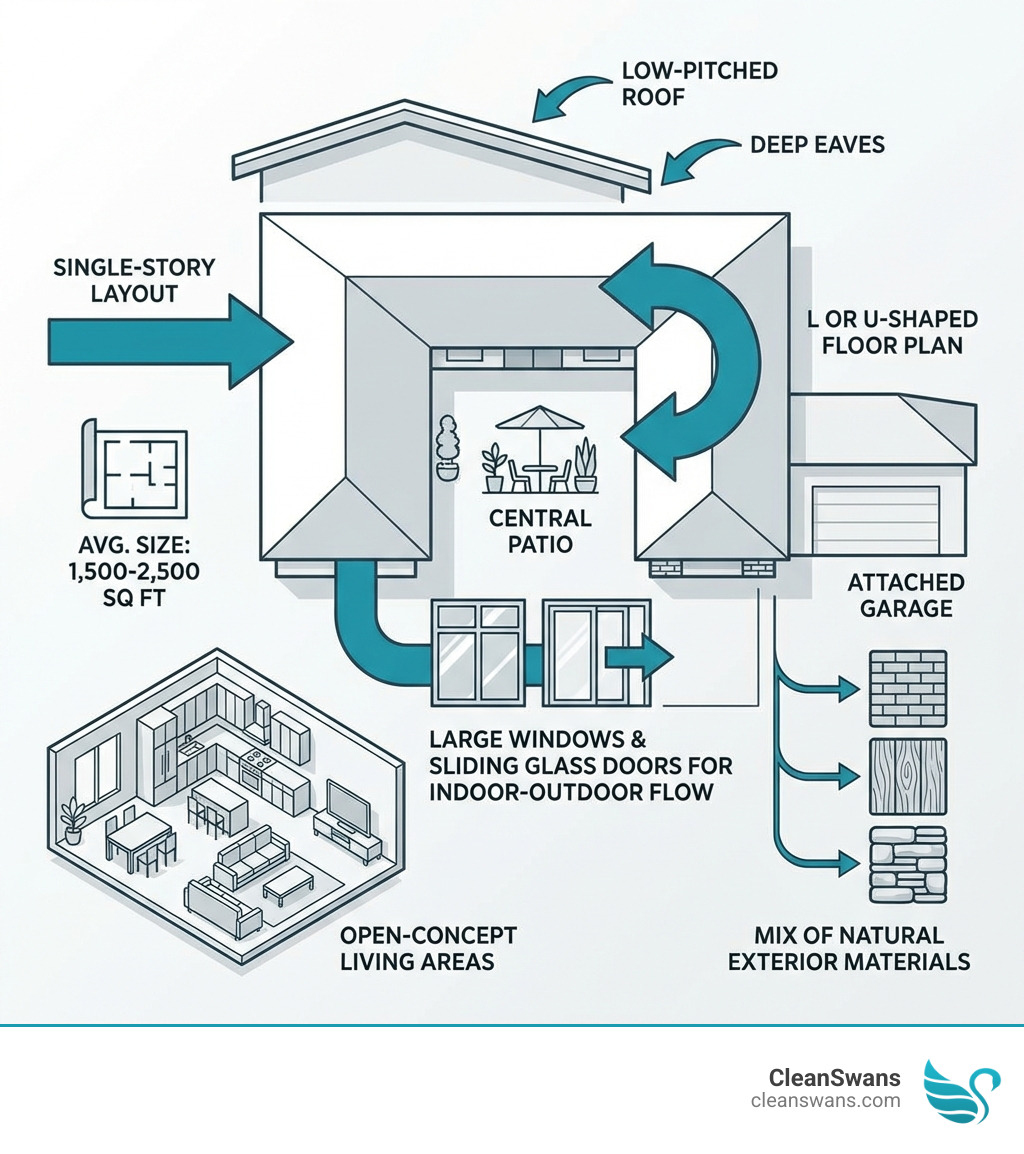
Traditional ranch-style homes are instantly recognizable for their simplistic, no-frills design elements. They are typically single-story structures with a signature low-slung frame, often ranging from 900 to a more generous 2,500 square feet. Popular designs often fall between 1,500 and 2,500 square feet.
Key architectural features include:
- Single-story floor plan: The most defining characteristic, offering ease of movement and accessibility.
- Long, low-pitched rooflines: Often with deep overhanging eaves, contributing to their horizontal aesthetic.
- Rectangular, L-shaped, or U-shaped layouts: These configurations often wrap around a central patio or backyard, enhancing privacy and outdoor access.
- Large windows and sliding glass doors: Designed to maximize natural light and blur the lines between indoor and outdoor living.
- Attached garages: A common feature, providing convenience and often contributing to the home’s overall footprint.
- Asymmetrical facade: Breaking away from more formal, symmetrical styles.
- Mix of materials: Exteriors frequently feature a blend of natural materials like brick, stucco, and wood, reflecting a humble yet sturdy aesthetic. For instance, many ranch homes feature a red brick fireplace.
The Pros and Cons of Ranch Living
Like any architectural style, ranch homes come with their own set of advantages and disadvantages. Understanding these can guide your ranch homes interior design decisions.
| Advantages | Disadvantages |
|---|---|
| Accessibility: Single-story living means no stairs, making them ideal for aging in place, families with young children, or those with mobility challenges. This is often cited as the main advantage. | Low Ceilings: Many ranch homes feature an eight-foot ceiling height, which can sometimes feel restrictive. |
| Open-Concept Layouts: The inherent open floor plan promotes a sense of spaciousness and facilitates easy flow between living areas. | Lack of Architectural Interest: Some traditional ranch homes can appear simplistic, lacking the ornate details found in other styles. |
| Large Backyards: Ranch homes often come with large backyards, perfect for creating extensive indoor-outdoor living spaces. | Small Windows: While some have large windows, many older ranch homes may have smaller windows, limiting natural light. |
| Easier Maintenance: Exterior maintenance can be simpler due to the single story. | Larger Footprint: Ranch homes generally require larger lots than two-story homes, which can be a disadvantage in areas with expensive land. |
| Renovation Potential: Their straightforward structure can make certain renovations, like opening up walls, more feasible (if non-load-bearing). | Boxy Layouts: The layouts of many ranch homes tend to be somewhat boxy, which can present a design challenge for adding visual interest. |
Designing for Flow: Open Layouts and Indoor-Outdoor Connection
The inherent structure of a ranch home, with its single story and often expansive footprint, provides a fantastic canvas for creating harmonious flow and maximizing connections to the outdoors.
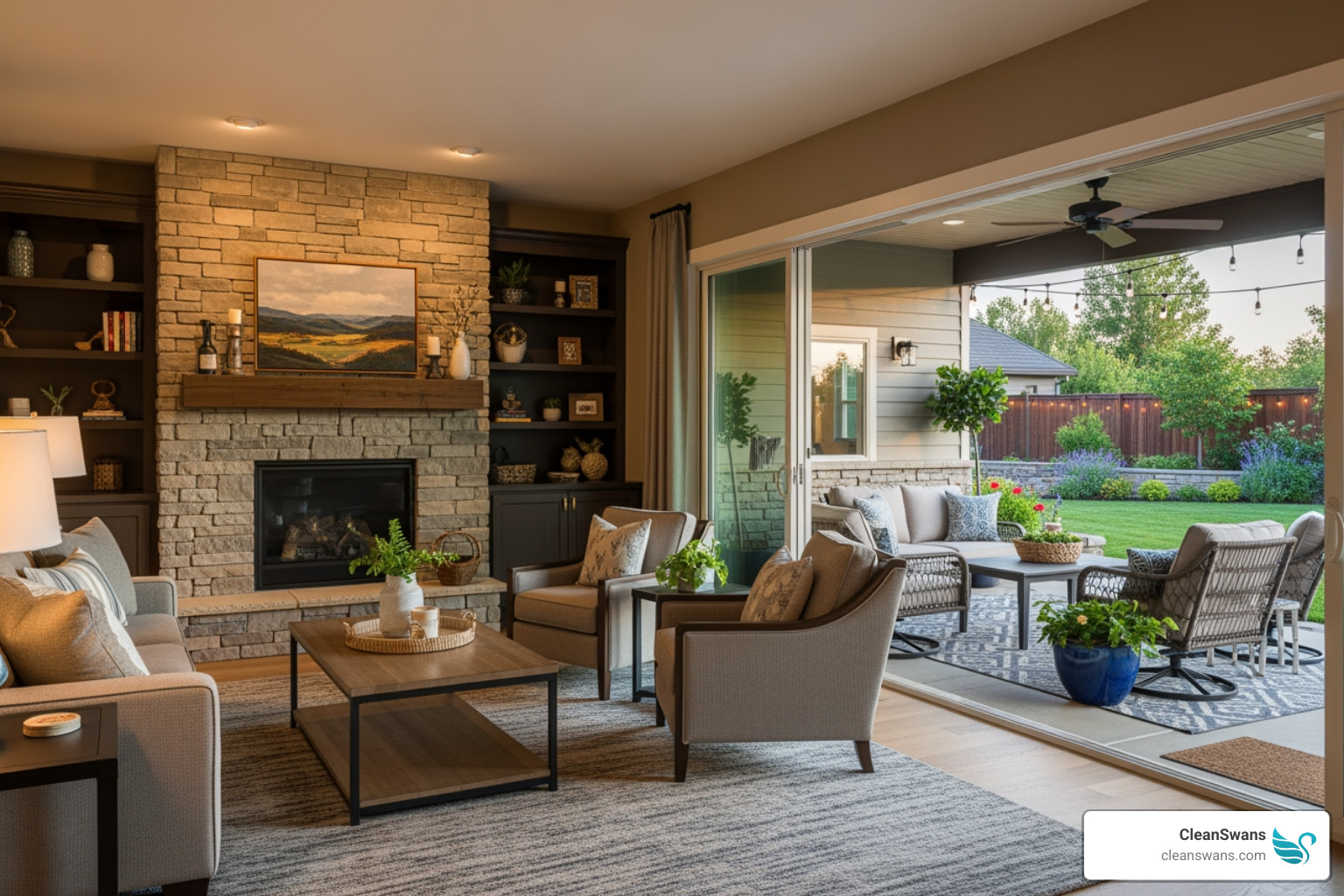
Maximizing the Open-Concept Layout
The open-concept layout, a hallmark of ranch homes, is both a blessing and a challenge. While it creates a sense of spaciousness, it can sometimes feel undefined or chaotic without thoughtful planning. Our approach to ranch homes interior design accepts this openness while creating distinct, functional zones.
- Zoning with Area Rugs and Lighting: Area rugs are your best friend in an open plan. They visually anchor furniture groupings and define distinct “rooms” within a larger space. Complement this with varied lighting – a statement chandelier over a dining area, floor lamps for a cozy reading nook, and recessed lighting for general illumination. You can also use distinct accent colors and varying furniture heights to further delineate zones.
- Floating Furniture Arrangements: Instead of pushing all furniture against walls, consider floating sofas and chairs in the center of large spaces. This creates natural pathways and makes the room feel more dynamic. Ensure you maintain at least 36 inches of space for walkways between furniture groupings to allow for comfortable movement.
- Low-Profile Furniture: To maintain sightlines and improve the feeling of openness, opt for low-slung furniture. A low, mid-century-style sofa, for example, can instantly make a room’s eight-foot ceiling feel higher. Low-profile storage furniture also helps maintain visibility across the entire open layout.
- Utilizing Built-ins: Ranch homes, especially older ones, sometimes lack ample storage. Custom built-ins are a fantastic solution. Flanking a fireplace with built-in shelving not only adds storage but also highlights personal collections and adds architectural interest. For smaller spaces, consider floor-to-ceiling cabinets, slim bookcases, or even utility pegboards in areas like the kitchen.
- Creating Clear Walkways: With an open layout, it’s easy for furniture to impede natural traffic flow. Map out your space using digital floor plan creators to test arrangements and ensure comfortable, clear pathways throughout the home.
For more custom advice on defining and enhancing your living spaces, explore our Interior Styling services.
Blending Indoor and Outdoor Living
Ranch homes and outdoor living go hand-in-hand. Many come with generous backyards, and the design often includes large sliding glass doors that provide direct access to a patio, deck, or lawn. This natural connection is a cornerstone of ranch homes interior design.
- Seamless Transitions: Create a truly integrated feel by using matching flooring materials inside and out, such as natural stone tiles. This visual continuity makes the outdoor space feel like an extension of your interior.
- Expanded Outdoor Living Spaces: Maximize your backyard with comfortable outdoor areas. Popular choices include:
- Patios and Decks: Furnish these with weather-proof furniture to create inviting outdoor living rooms.
- Outdoor Kitchens and Dining Areas: Perfect for entertaining, these add significant functionality.
- Sunrooms or Enclosed Decks: These offer the comfort of indoor living with an immersive outdoor experience.
Outdoor living improvements can often cost less than other types of home additions, making them a smart investment for expanding usable space.
- Large Windows and Sliding Glass Doors: Accept these features! They are crucial for maximizing daylight and providing expansive views of your property. If your ranch home has smaller windows, consider upgrading to full-height glass panels to instantly transform the mood and amplify the feeling of openness.
- Landscaping Integration: Thoughtful landscaping can improve the indoor-outdoor connection. Use native grasses, plants, and stones to echo the surrounding environment. Incorporating elements like fountains or rock gardens can add tranquility and visual interest.
The Complete Guide to Ranch Homes Interior Design
The beauty of ranch homes interior design lies in its versatility. These homes provide a neutral backdrop that can be adapted to a multitude of styles, from rustic charm to sleek modernism.
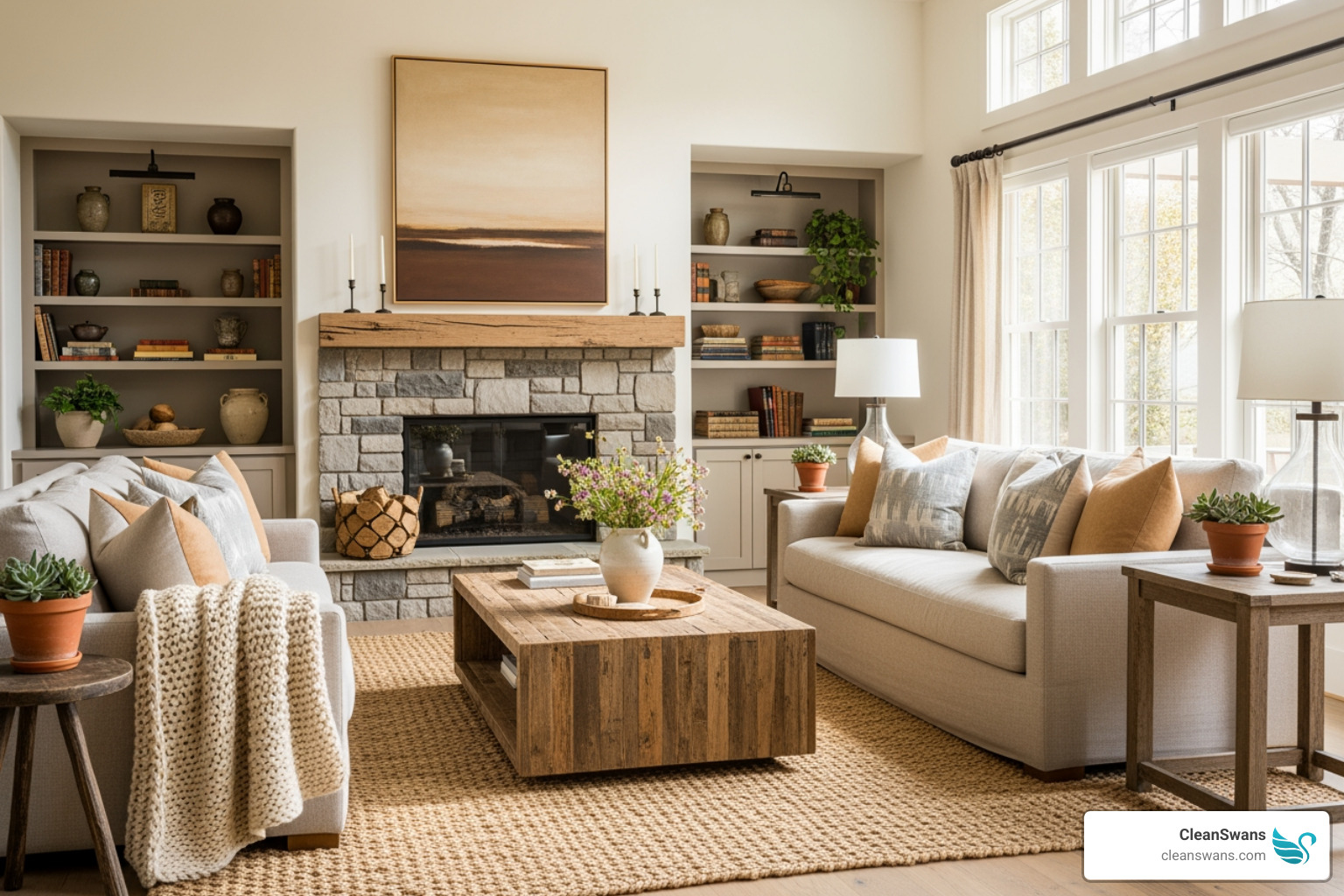
Effective Color Palettes and Strategies
Color plays a crucial role in shaping the atmosphere of your ranch home. Given their often eight-foot ceilings and open layouts, strategic color choices can make a significant difference.
- Neutral Palettes for Openness: Neutral palettes in light shades are generally best for ranch homes to keep rooms feeling open and inviting. Whites, beiges, light grays, and soft blues or greens create a sense of calm and expansiveness. A neutral color scheme doesn’t mean every space has to be the same color; there are hundreds of different hues with subtle undertones. Learn more about how to choose a neutral color scheme effectively.
- Earthy Tones for Warmth: To improve the inherent warmth of a ranch home, lean into earthy tones like terracotta, sage greens, and sandy neutrals. These colors feel timeless and connect beautifully with the home’s natural roots.
- High-Reflectance Paint for Low Ceilings: For ranch homes with standard eight-foot ceilings, paint trim and ceilings with high-reflectance, low-VOC white paint. This helps bounce light around the room, making the space feel taller and brighter.
- Using Accent Colors: While a neutral base is ideal, don’t shy away from pops of color. Introduce vibrant hues through accent walls, artwork, throw pillows, or furniture to inject personality and prevent the space from feeling flat.
Furnishing Your Ranch: From Modern to Traditional
Furnishing a ranch home involves balancing comfort, style, and the home’s architectural characteristics. The goal is to create an inviting space that feels cohesive and functional.
- Low-Slung Furniture Profiles: As mentioned, keeping furniture low and grounded complements the horizontal lines of a ranch-style home. Think mid-century modern sofas, armchairs with low backs, and streamlined coffee tables. This maintains open sightlines and improves the spacious feel.
- Incorporating Curves to Contrast Boxiness: Ranch homes often have a somewhat boxy layout. To introduce visual interest and soften these lines, incorporate curvy elements. Consider curved sofas or chairs, nesting round side tables, or an oval dining table. Even round chandeliers or light fixtures can add a pleasing contrast.
- Mixing Modern and Traditional Pieces: The beauty of a ranch home is its adaptability. You don’t have to stick to one era. We often find that mixing modern furnishings with traditional elements creates a rich, layered look. For example, a sleek, contemporary sofa can pair beautifully with a vintage wooden console table or a classic patterned rug.
- Key Furnishing Elements to Consider:
- Sectional Sofa: Provides ample seating and can help define a living area in an open space.
- Streamlined Coffee Table: Keeps the central area open and uncluttered.
- Accent Chairs: Offer additional seating and an opportunity to introduce different textures or colors.
- Built-in Storage: Maximizes functionality without consuming floor space.
- Textured Fabrics: Layering materials like leather, linen, stone, and wool adds visual depth and prevents the space from feeling one-dimensional.
For expert guidance on furnishing and styling your home to perfection, explore our Home Styling / Seasonal Staging services.
Popular Styles That Complement ranch homes interior design
The inherent simplicity and open nature of ranch homes make them incredibly versatile for various interior design styles.
- Mid-Century Modern: This is a natural fit, given the ranch home’s origins. Accept clean lines, organic shapes, functional design, and iconic pieces from the 1950s and 60s. Think teak furniture, geometric patterns, and vibrant accent colors.
- Modern Farmhouse: If you love rustic charm with a contemporary twist, this style works wonderfully. Combine natural wood tones, shiplap accents, comfortable upholstered furniture, and industrial-inspired lighting.
- Scandinavian: Emphasizing minimalism, functionality, and light-filled spaces, Scandinavian design complements the ranch’s open layout perfectly. Think light wood, white walls, clean lines, and cozy textiles.
- Bohemian: For a more eclectic and relaxed vibe, bohemian style can thrive in a ranch home. Layer textures, patterns, and global-inspired decor, incorporating natural materials, plants, and comfortable, low-slung seating.
- The “Rich Ranch” Aesthetic: This emerging trend, popularized by shows like Yellowstone, juxtaposes rustic farmhouse style with contemporary furnishings for an liftd, sophisticated look. It involves using organic materiality (limestone, terra-cotta, wrought iron, reclaimed wood) with considered layers and restraint. Think hand-stitched leather pillows, vintage textiles, burnished bronze fixtures, and luxurious faux sables or minks tossed over sofas. The key is to refine traditional ranch elements, avoiding clichés while honoring craftsmanship.
- Personalizing a Modern Rancher: The best style is one that reflects your personality. We find that the most successful ranch homes interior design projects involve individualizing the space. Avoid generic trends like barn doors or wagon wheel lighting unless they genuinely align with your personal aesthetics. Instead, focus on creating spaces that invite and nourish community, balancing clean lines with warmth, and filling them with personal objects and original artwork.
Smart Renovations: Adding Value and Character
Renovating a ranch home offers a fantastic opportunity to update its aesthetic, improve functionality, and add significant value. With thoughtful planning, you can transform dated features into modern marvels.
Common Mistakes to Avoid in ranch homes interior design
When undertaking ranch homes interior design projects, especially renovations, it’s easy to fall into common traps. Avoiding these pitfalls can save you time, money, and heartache.
- Ignoring Vertical Space: With standard eight-foot ceilings, it’s crucial to use vertical space wisely. Don’t let walls go bare; consider tall bookcases, floor-to-ceiling drapery, or vertical art arrangements.
- Blocking Natural Light: Many older ranch homes already struggle with limited natural light. Avoid opaque window treatments. Instead, opt for sheer curtains or blinds that can be fully pulled up to maximize daylight. Strategically placed mirrors can also amplify perceived window space.
- Over-Cluttering Open Spaces: The beauty of an open-concept ranch is its flow. Overfilling it with too much furniture or decor can make it feel cramped and chaotic. Focus on quality over quantity and ensure ample negative space.
- Using Dated Finishes: Wall-to-wall carpeting over plywood sub-floors and dated kitchens with dark cabinets are common in older ranch homes. These finishes can instantly age a space. Prioritize updating these elements for a fresh look.
- Ignoring the Home’s Inherent Style: Don’t try to force a ranch home into a style it’s not. Accept its low-slung profile and informal nature. Transform it into a personalized oasis by blending its classic elements with crisp contemporary updates, rather than completely erasing its character.
- Removing Dated Entrance Dividers Without a Plan: Many ranch homes feature wooden spindle dividers or half-walls near the entrance. While these can feel dated, simply removing them might leave the space feeling unresolved. Consider replacing them with a more substantial half-wall topped with a square column or even a built-in console to add architectural interest and definition.
Updating Kitchens and Bathrooms
Kitchens and bathrooms are often the first spaces homeowners want to update in a ranch home. These areas, particularly older ones, frequently feature small windows, dark cabinets, and less-than-ideal layouts.
- Opening Up Galley Kitchens: Many traditional ranch homes come with closed-off galley kitchens. If the walls are non-load-bearing, opening them up to the adjacent living or dining area can dramatically transform the space, creating a more modern, open-concept feel. Always consult a licensed contractor for structural advice.
- Updating Dark Cabinets: Dated kitchens with dark cabinets can make a space feel small and dim. Consider painting cabinets in a lighter, neutral color, or replacing them entirely with modern, sleek designs. Adding new hardware in matte black or brushed brass and installing sleek LED lighting can instantly refresh the look.
- Modernizing Fixtures and Finishes: Replace dated tile, countertops, and plumbing fixtures with contemporary choices. Think quartz or granite countertops, subway tile backsplashes, and modern, water-efficient faucets.
- Inspiration from Fixer-Uppers: Even homes with “red brick fireplaces, paneled walls, and wall-to-wall carpeting” can be transformed. Focus on brightening the space, updating surfaces, and incorporating modern amenities while respecting the home’s bones. For example, a kitchen can be designed around a custom hand-hammered copper hood or a powder room can feature local wildflower mosaic tile work.
After your renovation, our Post Renovation Cleaning services ensure your newly designed spaces are sparkling clean and ready for you to enjoy.
Adding Architectural Interest
One common criticism of ranch homes is a perceived lack of architectural interest. However, this blank canvas offers incredible opportunities to introduce unique features that lift the design.
- Exposed or Faux Beams: Adding exposed beams, or even faux beams, to ceilings can create instant architectural interest and a rustic, cozy feel. This is particularly effective in larger living areas and can help define the space vertically.
- Built-in Shelving and Niches: Custom built-ins are not just for storage; they add character. Flanking a fireplace with built-in bookshelves creates a focal point and a sense of permanence. Niches can display art or decorative objects, adding depth to plain walls.
- Fireplace Makeovers: The traditional red brick fireplace is a common feature. Update it by painting the brick, adding a new mantel, or even refacing it with stone or a streamlined, modern material. Anchoring a living room around a newly styled fireplace creates a natural gathering spot.
- Upgrading Trim and Millwork: Simple, understated trim can be replaced with more substantial crown molding, baseboards, or wainscoting to add a layer of classic detail.
- Showcasing Beautiful Home Changes: Look to examples of successful renovations for inspiration. A beautifully decorated ranch home, like those featured in design magazines, often showcases how thoughtful updates, even to an eight-foot ceiling, can create an neat and sophisticated space.
Frequently Asked Questions about Ranch Home Interiors
How do you make a small ranch living room feel open?
To make a small ranch living room feel open, we recommend several strategies:
- Use light colors: Paint walls and ceilings in light-reflective whites, soft grays, or pale neutrals.
- Choose low-profile, multi-functional furniture: Opt for pieces with slim legs and low backs to maintain sightlines. Consider nesting tables or storage ottomans that serve multiple purposes.
- Maximize natural light with sheer curtains: Replace heavy drapes with sheer panels that allow light to filter in while still offering some privacy.
- Use mirrors strategically: Position large mirrors opposite windows to reflect light and create the illusion of a larger, more expansive space.
What is the best flooring for a ranch-style home?
The best flooring depends on your style, budget, and lifestyle, but several options shine in ranch homes:
- Hardwood floors: A classic choice, wide-plank oak, or other natural hardwoods improve warmth and connect to the landscape. They are durable and timeless.
- Natural stone tiles: Materials like slate or travertine can create a luxurious feel and are excellent for seamless indoor-outdoor transitions, especially in high-traffic areas or sunrooms.
- High-quality laminate or luxury vinyl plank (LVP): These are durable, water-resistant, and can mimic the look of hardwood or stone at a more budget-friendly price point, offering a solid compromise without sacrificing style.
How can I add character to a ranch home with low ceilings?
Low ceilings are a common characteristic, but they don’t have to limit your design. Here’s how we add character:
- Add faux wood beams: Installing faux beams can introduce architectural interest, texture, and a rustic charm, drawing the eye upward without structural changes.
- Use vertical lines in decor: Incorporate tall, slim bookcases, floor-to-ceiling drapery, or even subtly striped wallpaper to create an illusion of height.
- Draw the eye upward with interesting light fixtures: Choose pendant lights or chandeliers that hang lower but are visually striking, guiding the gaze upwards. Ensure they are appropriate for the ceiling height to avoid obstruction.
- Paint ceilings a lighter color: Using the same light color as the walls, or a slightly lighter shade, can visually expand the space. High-reflectance white paint is particularly effective.
Conclusion
The modern ranch home is a testament to timeless design, offering a unique blend of comfort, functionality, and understated elegance. As we’ve explored, ranch homes interior design isn’t about conforming to a single aesthetic but about embracing the home’s horizontal lines, open flow, and deep connection to the outdoors.
From understanding their rich history and architectural nuances to strategically utilizing open layouts and blending indoor-outdoor living, these homes provide an incredible canvas for personal expression. Whether you lean towards mid-century modern, a sophisticated “rich ranch” aesthetic, or a personalized blend of styles, the ranch home offers remarkable versatility. By avoiding common mistakes and thoughtfully updating key areas like kitchens and bathrooms, you can add significant value and character to your home.
At CleanSwans, we believe every home has a story, and we’re passionate about helping our clients lift their living spaces. The charm of a ranch home, with its promise of informal yet gracious living, continues to captivate. With the right design choices, your ranch can be transformed into a modern, comfortable, and deeply personalized sanctuary.
Transform your space with our professional Interior Styling services and let us help you bring your vision for exceptional ranch homes interior design to life.