

Why Yacht Upholstery Care Protects Your Maritime Investment
Boat upholstery cleaning is essential to preserve the value and appearance of your yacht. The marine environment is harsh, with sun and salt reducing the lifespan of marine vinyl by 30-60% without proper care. However, a consistent cleaning routine can cut the need for premature upholstery replacement by up to 40%.
Quick Answer: Essential Steps for Boat Upholstery Cleaning
- Remove loose debris with a vacuum or soft brush.
- Apply a pH-neutral marine cleaner to small sections.
- Gently agitate with a soft-bristle brush using circular motions.
- Wipe clean with a damp microfiber towel.
- Rinse with fresh water to remove all residue.
- Dry completely before covering or storing.
- Apply UV protectant seasonally for long-term preservation.
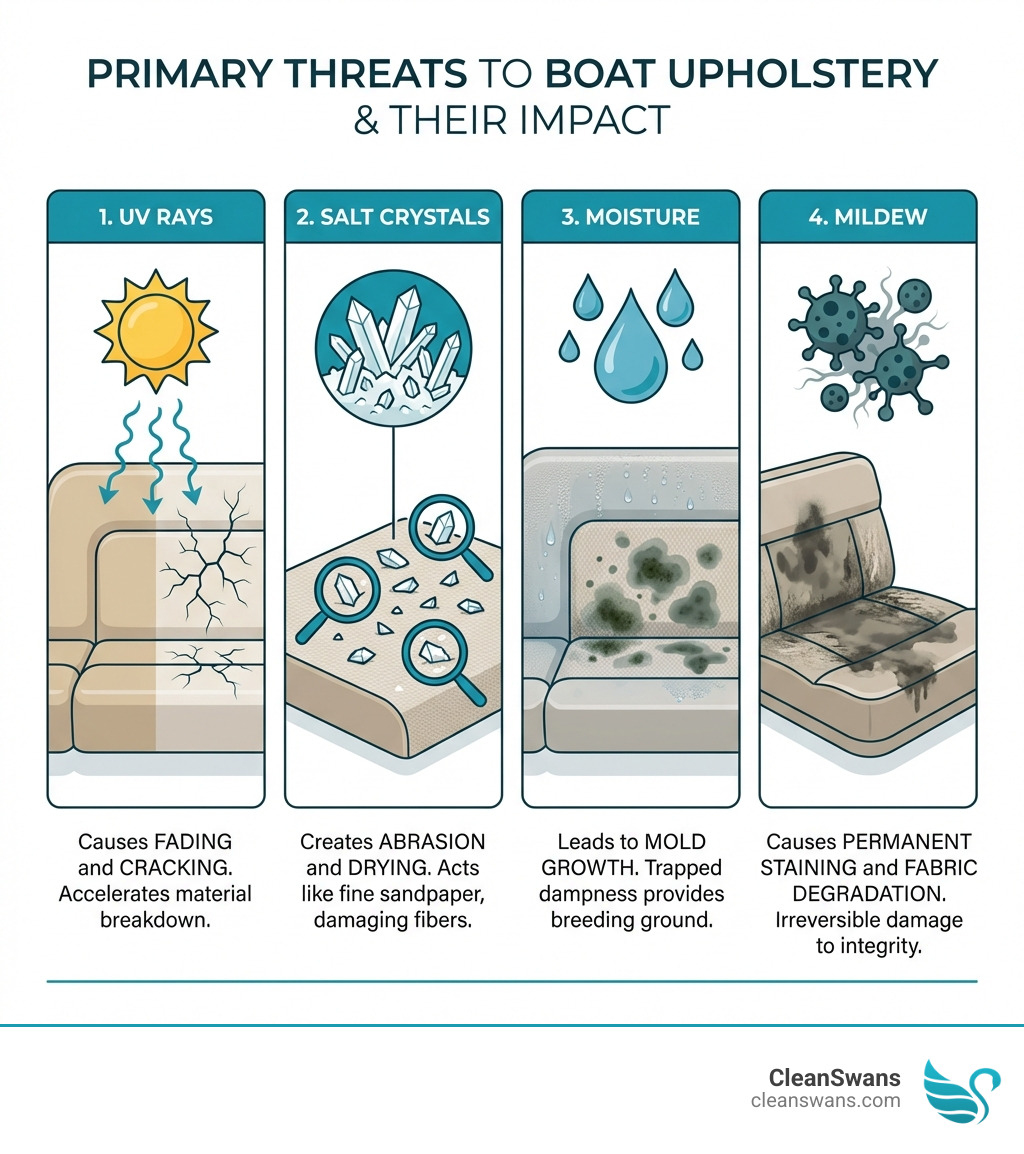
The real threat isn’t just visible dirt. Salt crystals intensify UV rays, and trapped moisture creates a breeding ground for mildew, which permanently degrades fabric. For yacht owners, upholstery maintenance is about protecting a significant asset and ensuring your vessel is always ready.
As the Founder of CleanSwans, I’ve developed white-glove service protocols for high-value marine assets. This guide shares that expertise, offering a practical framework for you to use or to entrust to a trusted service partner.
Boat upholstery cleaning terms to know:
Understanding Your Yacht’s Upholstery: Materials & Vulnerabilities
Our yachts are more than just vessels; they are floating sanctuaries, often adorned with luxurious upholstery that improves comfort and aesthetic appeal. However, the unique marine environment poses constant challenges to these materials. Understanding the specific type of upholstery on your yacht and its vulnerabilities is the first step in effective boat upholstery cleaning and maintenance. Whether it’s porous or non-porous, each material reacts differently to sun, salt, and moisture, demanding custom care.
Common Marine Upholstery Materials
Marine environments require robust materials. Here’s a look at the most common types you’ll find on a yacht:
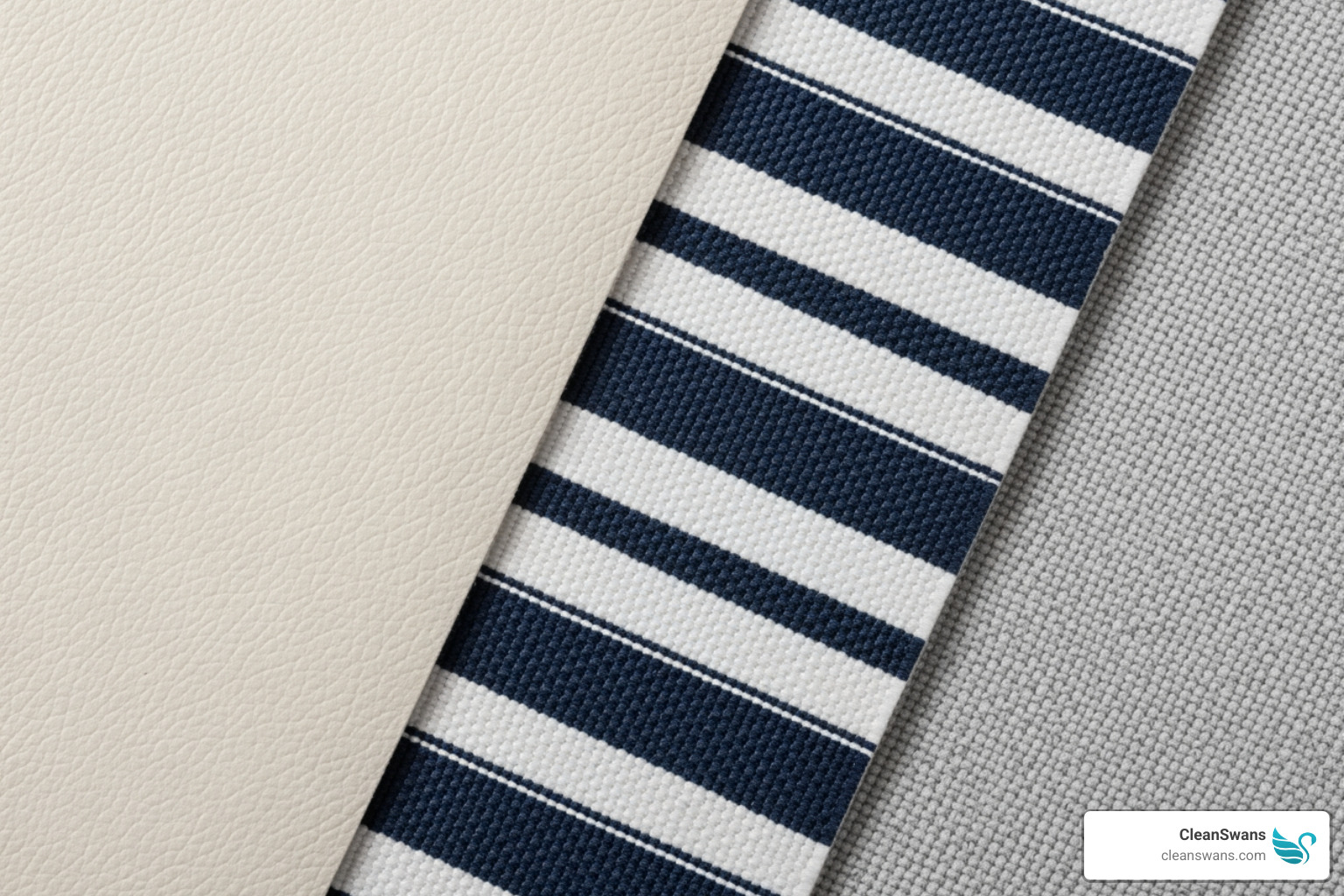
- Marine-Grade Vinyl: This is perhaps the most popular choice for boat seating, cushions, and headliners due to its waterproof nature. High-quality marine vinyl, often supplied by reputable brands like Sunbrella Horizon, Morbern, or Spradling, is typically treated with mold, mildew, and UV-resistant chemicals. However, despite these treatments, vinyl is a porous material. This means it can become clogged and grimy, and is susceptible to stains from sunscreen, food, and, yes, even mold. Leaving vinyl exposed to direct sunlight can also cause fading and cracking over time.
- Genuine Leather: For the ultimate in luxury, some yacht interiors feature genuine leather. Leather requires specialized care to maintain its suppleness and prevent drying and cracking. Products like Autoglym Leather Cleaner are designed to be silicone-free with a pH formulation that leaves essential oils intact, which is crucial for preserving leather’s natural feel and longevity. A dedicated Leather Care & Revive kit, comprising cleaner and conditioner, is often recommended.
- Treated Canvas & High-Performance Fabrics: Materials like treated canvas are common for boat covers, bimini tops, and sometimes interior accents. Specialist fabrics such as Sunbrella are designed to endure years on the water, resisting mold, mildew, and salt residue. While Sunbrella fabrics do not promote mildew growth themselves, mildew can grow on accumulated dirt and organic matter on their surface. For comprehensive care, Sunbrella offers a detailed guide for tough stains and a care guide specifically for their marine interiors. Products like Starbrite Sail & Canvas Cleaner are also formulated for these materials.
Identifying Signs of Wear and Tear
Regular inspection of your yacht’s upholstery allows us to catch minor issues before they become major headaches. Here are key signs of wear and tear to look out for:
- Fading and Discoloration: This is a tell-tale sign of prolonged UV exposure, especially in high-traffic, sun-drenched areas. Colors may dull or change, reducing the aesthetic appeal of your yacht.
- Cracking and Brittleness: This often affects vinyl and leather. It can be caused by a combination of sun damage, drying out from salt, and the use of harsh, inappropriate cleaning chemicals that strip essential plasticizers.
- Stitching Deterioration: The threads holding your upholstery together are vulnerable. Harsh chemicals, particularly bleach, can weaken and deteriorate stitching, leading to seams failing prematurely.
- Microbial Pinking Stains: This is a peculiar, pinkish discoloration often seen on marine vinyl. It’s caused by bacteria (Serratia marcescens) that thrive in warm, moist environments and can be exacerbated by certain sunscreen ingredients like PABA. Consistent care and avoiding specific sunscreen types can help prevent this.
Addressing these minor issues promptly can significantly extend the life of your upholstery. For small repairs or maintenance needs that go beyond cleaning, we offer Light Handyman Services to keep your yacht in top condition.
The Enemies of Elegance: Sun, Salt, and Moisture
The marine environment is beautiful but relentlessly unforgiving. Your yacht’s upholstery faces a constant barrage from three primary elements:
- UV Degradation: The sun’s ultraviolet rays are the leading cause of upholstery deterioration. On a yacht, this is intensified by the sun’s direct rays combined with the reflection off the water, effectively doubling the UV exposure. This leads to fading, embrittlement, and cracking, especially in vinyl.
- Salt Crystal Abrasion: Salt spray is unavoidable on the water. When it dries on your upholstery, salt crystals form. These tiny, abrasive particles can act like miniature magnifying glasses, intensifying the sun’s rays and accelerating the drying out process of the material. They also contribute to a gritty texture that can cause wear and tear with friction.
- Trapped Moisture: Humidity, rain, and sea spray mean your yacht is constantly battling moisture. If not properly ventilated and dried, this moisture can become trapped within or beneath upholstery, creating an ideal breeding ground for mold and mildew. Non-breathable boat covers, while protecting from external elements, can inadvertently trap this moisture, exacerbating the problem.
The Essential Toolkit: Recommended Cleaners & Tools
To effectively combat these environmental aggressors and ensure meticulous boat upholstery cleaning, having the right arsenal of cleaners and tools is paramount. Just as we wouldn’t use a wrench for a delicate electrical repair, we must select products and equipment specifically designed for marine upholstery. The goal is always to clean without causing damage, ensuring longevity and preserving the luxurious feel of your yacht’s interior.
Choosing the Right Cleaning Agents
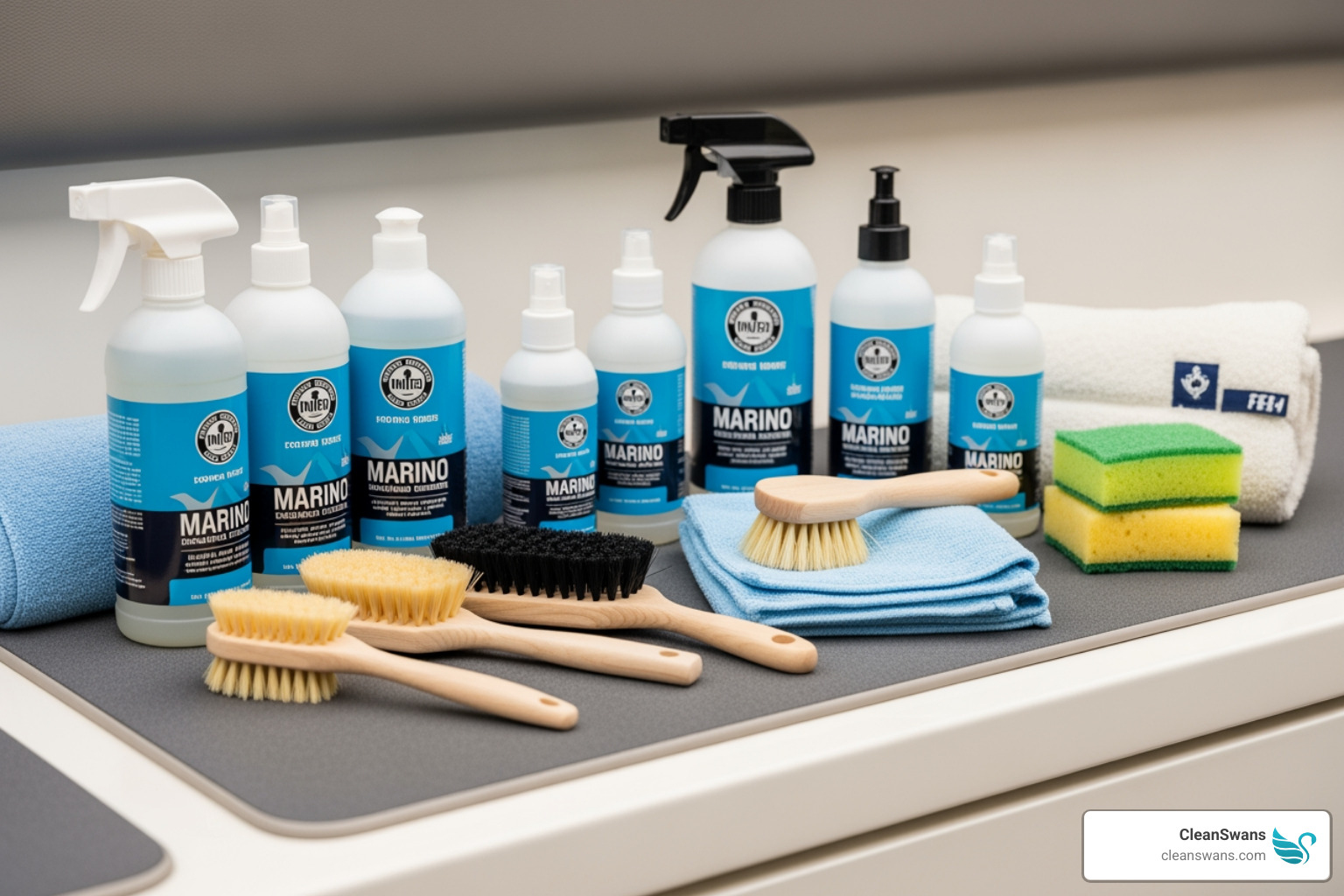
The market is flooded with cleaning products, but for yacht upholstery, precision is key. We always opt for marine-specific, pH-neutral formulas that are effective yet gentle.
| Material | Recommended Cleaners | “`
Introduction
Boat upholstery cleaning is essential to preserve the value and appearance of your yacht. Here’s what you need to know:
Quick Answer: Essential Steps for Boat Upholstery Cleaning
- Remove loose debris with a vacuum or soft brush
- Apply a pH-neutral marine cleaner to small sections
- Gently agitate with a soft-bristle brush using circular motions
- Wipe clean with a damp microfiber towel
- Rinse with fresh water to remove all residue
- Dry completely before covering or storing
- Apply UV protectant seasonally for long-term preservation
The marine environment is uniquely harsh on upholstery. Constant exposure to sun and salt can reduce the lifespan of marine vinyl by 30-60% without regular cleaning and protection. The good news? Boat owners who maintain a consistent cleaning routine reduce the need for premature upholstery replacement by an estimated 25-40%.
Yet while 60-70% of boaters wash their boats, only 30-40% stick to a regular deep-cleaning schedule for their upholstery. This gap represents both a risk and an opportunity.
The real threat isn’t what you can see. Salt crystals act like tiny magnifying glasses, intensifying UV rays and accelerating deterioration. The sun’s reflection off the water doubles down on damage. Trapped moisture creates the perfect breeding ground for mildew, which doesn’t just look bad—it permanently degrades fabric integrity.
For owners of luxury yachts and secondary watercraft, upholstery maintenance isn’t just about aesthetics. It’s about protecting a significant asset and ensuring your vessel remains pristine and ready whenever you need it.
As the Founder of CleanSwans, I’ve spent years developing white-glove service protocols for high-value residential and marine assets, including comprehensive yacht care programs where boat upholstery cleaning is a cornerstone of long-term preservation. This guide distills that expertise into a practical framework you can implement yourself—or delegate to a trusted service partner.
Boat upholstery cleaning terms to know:
Understanding Your Yacht’s Upholstery: Materials & Vulnerabilities
Your yacht’s upholstery is constantly exposed to sun, salt, and moisture. Understanding the specific materials used is the first step in effective boat upholstery cleaning and maintenance, as each type has unique vulnerabilities.
Common Marine Upholstery Materials
Marine environments demand robust materials. Here are the most common types:
- Marine-Grade Vinyl: Popular for its waterproof nature, it’s often treated to resist mold, mildew, and UV rays. However, it’s porous and can become grimy, stained, and is susceptible to fading and cracking from sun exposure.
- Genuine Leather: Found in luxury interiors, leather requires specialized, pH-balanced cleaners and conditioners to prevent it from drying out and cracking.
- Treated Canvas & High-Performance Fabrics: Materials like Sunbrella are designed for marine use, resisting mold and salt. While the fabric itself resists mildew, it can grow on accumulated dirt. Sunbrella provides its own detailed guide for tough stains and a care guide for their products.
Identifying Signs of Wear and Tear
Regularly inspect your upholstery for these common issues:
- Fading and Discoloration: A clear sign of UV damage, often seen in sun-exposed areas.
- Cracking and Brittleness: Affects vinyl and leather, caused by sun, salt, and harsh cleaning chemicals.
- Stitching Deterioration: Threads can be weakened by harsh chemicals like bleach, leading to seam failure.
- Microbial Pinking Stains: A pinkish discoloration on vinyl caused by bacteria in warm, moist conditions, often worsened by certain sunscreens.
Addressing these issues promptly extends your upholstery’s life. For repairs beyond cleaning, consider professional Light Handyman Services.
The Enemies of Elegance: Sun, Salt, and Moisture
Your yacht’s upholstery faces three primary threats:
- UV Degradation: The sun’s rays, amplified by water reflection, cause fading, brittleness, and cracking.
- Salt Crystal Abrasion: Dried salt acts like sandpaper, causing physical wear and intensifying sun damage.
- Trapped Moisture: Humidity and spray create a breeding ground for mold and mildew if not properly dried and ventilated.
The Essential Toolkit: Recommended Cleaners & Tools
To properly perform boat upholstery cleaning, you need the right tools and cleaners. Using products designed for marine environments is crucial to clean effectively without causing damage.
Choosing the Right Cleaning Agents
Always opt for marine-specific, pH-neutral formulas. Here are our recommendations:
- For Vinyl: Use mild soap and water for general cleaning. For tougher jobs, a pH-neutral marine vinyl cleaner like Simple Green All-Purpose Cleaner (also on Amazon), Meguiar’s 57 Vinyl & Rubber Cleaner, or Starbrite Vinyl Boat Seat Cleaner will restore luster and offer UV protection.
- For Leather: Use a dedicated, silicone-free leather cleaner (like Autoglym) and conditioner to maintain its essential oils and prevent cracking.
- For Canvas & Fabrics: Mild soap and water work for light dirt. For deeper cleaning, use a marine fabric cleaner like Starbrite Sail & Canvas Cleaner. For Sunbrella fabrics, use their specific cleaners like Sunbrella Clean or a diluted bleach solution for stubborn mildew, but only on the fabric itself.
Whenever possible, choose biodegradable solutions to protect the marine environment.
Harsh Chemicals to Avoid at All Costs
Using the wrong products can cause irreversible damage. Never use:
- Bleach: Destroys stitching and makes vinyl brittle.
- Ammonia: Strips protective coatings and causes premature aging.
- Abrasive Powders or Scouring Pads: Scratches and damages the surface.
- Alcohol-Based Cleaners: Dries out and cracks vinyl and leather.
- Magic Erasers: Acts like fine sandpaper, removing the protective topcoat from vinyl and leaving it vulnerable to stains and sun damage.
The Professional’s Recommended Tools
Beyond the right cleaners, the proper tools ensure efficient and damage-free boat upholstery cleaning:
- Soft-Bristle Brushes: For gently agitating cleaners without scratching.
- High-Quality Microfiber Towels: Essential for lifting dirt and drying surfaces without leaving lint.
- Wet/Dry Vacuum with Soft Attachment: Useful for removing excess water from fabric upholstery and speeding up drying.
- Spray Bottles for Dilution: For proper dilution and even application of cleaning solutions.
The Definitive Guide to Boat Upholstery Cleaning & Maintenance
Effective boat upholstery cleaning requires a systematic, gentle approach. Work in small sections, using a consistent method to ensure every inch of your upholstery gleams. For those who prefer to leave the meticulous work to experts, our Services: Marine & Yacht Cleaning and Detailing are designed to deliver this level of care.
The Proper Procedure for Boat Upholstery Cleaning
Follow this step-by-step guide for professional-grade boat upholstery cleaning:
- Pre-Cleaning (Vacuuming): Use a vacuum with a soft brush attachment to remove all loose debris, sand, and crumbs. This prevents scratching during the wet cleaning phase.
- Mixing the Solution: Dilute your chosen marine cleaner according to the manufacturer’s instructions. A simple mix of gentle soap and water can also be effective for light cleaning.
- Gentle Agitation: Lightly spray the cleaner onto a small section. Use a soft-bristle brush in small, circular motions to lift the dirt without harsh scrubbing.
- Wiping and Lifting Dirt: Immediately wipe the area with a clean, damp microfiber towel, turning the towel frequently to a clean side to avoid spreading dirt.
- Final Rinse: Wipe the area again with a separate microfiber towel dampened only with fresh water. This removes any cleaner residue.
- Complete Drying: This is the most critical step to prevent mildew. Allow the upholstery to air dry completely. Prop up cushions and open compartments to maximize airflow.
Advanced Techniques for Stubborn Stain Removal
For tough stains, act quickly:
- Sunscreen: Use a pH-neutral cleaner. For persistent pinking stains, consistent cleaning is key.
- Ink and Marker: Gently dab with isopropyl (rubbing) alcohol on a clean cloth, testing on an inconspicuous spot first.
- Bird Droppings: Scrape off solids, then spray with a marine cleaner, let it sit, and wipe away.
- Food and Wine: Blot immediately, then treat with a pH-neutral cleaner, working from the outside of the stain inward.
- Grease and Oil: Blot with a dry cloth, apply an absorbent like cornstarch, then brush off. Clean the remaining spot with a pH-neutral cleaner. Sunbrella also recommends Sunbrella Extract for stubborn oil-based stains on their fabrics.
For more tips, Sunbrella offers a detailed ‘how to’ cleaning guide for their fabrics.
How to Handle Removable vs. Attached Boat Upholstery Cleaning
Your cleaning approach will vary slightly based on the type of upholstery.
- Removable Cushions: These are easier to clean thoroughly.
- Hand Washing: Soak in a solution of mild soap and lukewarm water. Gently agitate, rinse well, and air dry completely.
- Machine Washing: Some fabric covers (like Sunbrella) can be machine washed in cold water with mild detergent. Always air dry.
- Fixed Upholstery: Follow the general cleaning procedure above, working in small, manageable sections. Pay extra attention to rinsing and ensure the area is completely dry to prevent moisture from being trapped.
Proper drying is essential for both types to prevent mold and mildew growth.
Proactive Protection: Preserving Your Upholstery for the Long Haul
Proper boat upholstery cleaning is the first step; proactive protection is the next. A long-term preservation strategy creates a barrier against water and stains, extending the life and beauty of your yacht’s interior and helping you avoid costly replacements. Find more info about our deep cleaning services which include these protective measures.
Applying Protective Sealants & UV Protectants
Think of these as sunscreen for your upholstery, vital for the harsh marine environment:
- Modern Protectants: Advanced products create a durable, hydrophobic (water-repellent) barrier on your upholstery. This repels water, salt, and stains, making future cleaning easier and preventing mildew.
- UV Protection: A quality UV protectant restores the material’s ability to block the sun’s rays, reducing fading and cracking.
- Application: Apply protectants to a clean, dry surface. For even coverage, spray the product onto a microfiber applicator pad and wipe it on in overlapping lines.
- Buffing: Immediately after application, use a clean, dry microfiber towel to buff away any excess. This ensures a smooth, non-greasy finish.
The Power of a Quality Boat Cover
A well-fitted boat cover is one of the most effective tools for upholstery protection.
- Blocks UV Rays: A cover prevents sun damage and fading when the yacht is not in use.
- Keeps it Clean: It acts as a barrier against dust, dirt, bird droppings, and rain.
- Breathability is Key: Your cover must be breathable and preferably vented. Non-breathable covers trap moisture, creating a perfect environment for mold and mildew.
- Use Support Poles: Prop up the cover to improve airflow and prevent water from pooling.
Establishing a Routine Cleaning Schedule
Consistency is key to maintaining your yacht’s upholstery.
- After-Each-Use Wipe-Down: Quickly wipe down vinyl surfaces with a damp microfiber towel to remove salt and sunscreen.
- Weekly Spot Checks: Spot-check for any new spills or dirt and clean them immediately.
- Monthly Light Cleaning: During peak season, perform a more thorough cleaning with a marine-specific, pH-neutral cleaner every 2-4 weeks.
- Seasonal Deep Clean and Protectant Application: Do a comprehensive deep clean and apply a UV protectant twice a year—before the season starts and before winter storage.
Frequently Asked Questions about Yacht Upholstery Care
Here are answers to common questions about boat upholstery cleaning and maintenance.
Can I use household cleaners like bleach on my vinyl seats?
No. Household cleaners like bleach and ammonia are too harsh for marine vinyl. They strip the material’s protective oils, leading to cracking, fading, and damaged stitching. Always use a pH-neutral cleaner specifically designed for marine use.
What’s the best way to prevent mildew from returning?
Mildew prevention is all about moisture control. Always ensure your upholstery is completely dry before covering it. A vented boat cover is essential for allowing air to circulate and prevent moisture buildup. Applying a protective sealant after cleaning also creates a water-repellent barrier that helps stop mildew from forming.
How often should I perform a deep clean on my boat’s upholstery?
Your cleaning schedule depends on usage:
- After each trip: A quick wipe-down with fresh water removes salt and grime.
- During peak season: A thorough cleaning with a marine-specific cleaner is recommended every 2-4 weeks.
- Seasonally: At a minimum, perform a deep clean and apply a UV protectant twice a year—at the beginning of the season and before winter storage.
Conclusion
Effective boat upholstery cleaning is more than just a chore; it’s a vital component of protecting your maritime investment. By understanding your upholstery materials, using the right tools and gentle cleaners, and establishing a consistent cleaning and protection routine, you can significantly extend the lifespan and maintain the luxurious appearance of your yacht’s interior. We’ve seen how proactive care avoids costly repairs and premature replacements, ensuring your vessel remains a source of pride and enjoyment for years to come.
At CleanSwans, we are committed to delivering excellence in every aspect of yacht care. Our white-glove services are designed to offer you peace of mind, knowing that your luxury asset is maintained to the highest standards. For a truly pristine vessel without the effort, explore our White Glove Yacht & Marine Services and let us handle the details.