
Why a Home Staging Consultation is Your Secret Weapon for a Faster, More Profitable Sale
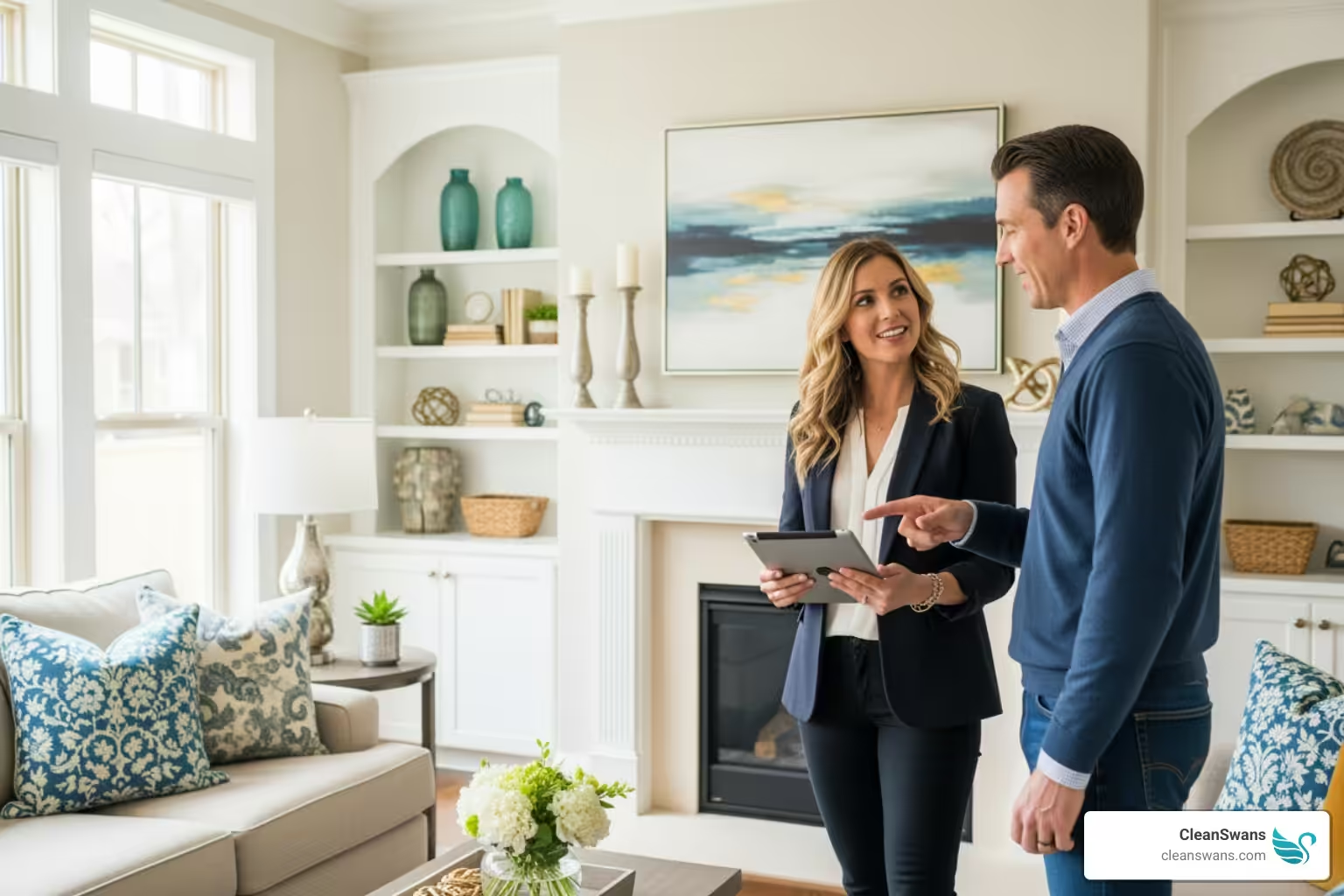
A home staging consultation is a professional assessment of your property designed to maximize its appeal to potential buyers. Here’s what you need to know:
- What it is: A meeting with a professional stager who evaluates your home through a buyer’s lens and provides actionable recommendations
- What you get: Room-by-room guidance on furniture placement, decluttering, paint colors, lighting, and curb appeal improvements
- Types available: Walk-and-Talk (verbal advice), Hands-On (stager implements changes), Written Report (detailed documentation), or Virtual (remote consultation)
- Typical cost: $200 to $1,000+ depending on home size, location, and stager experience
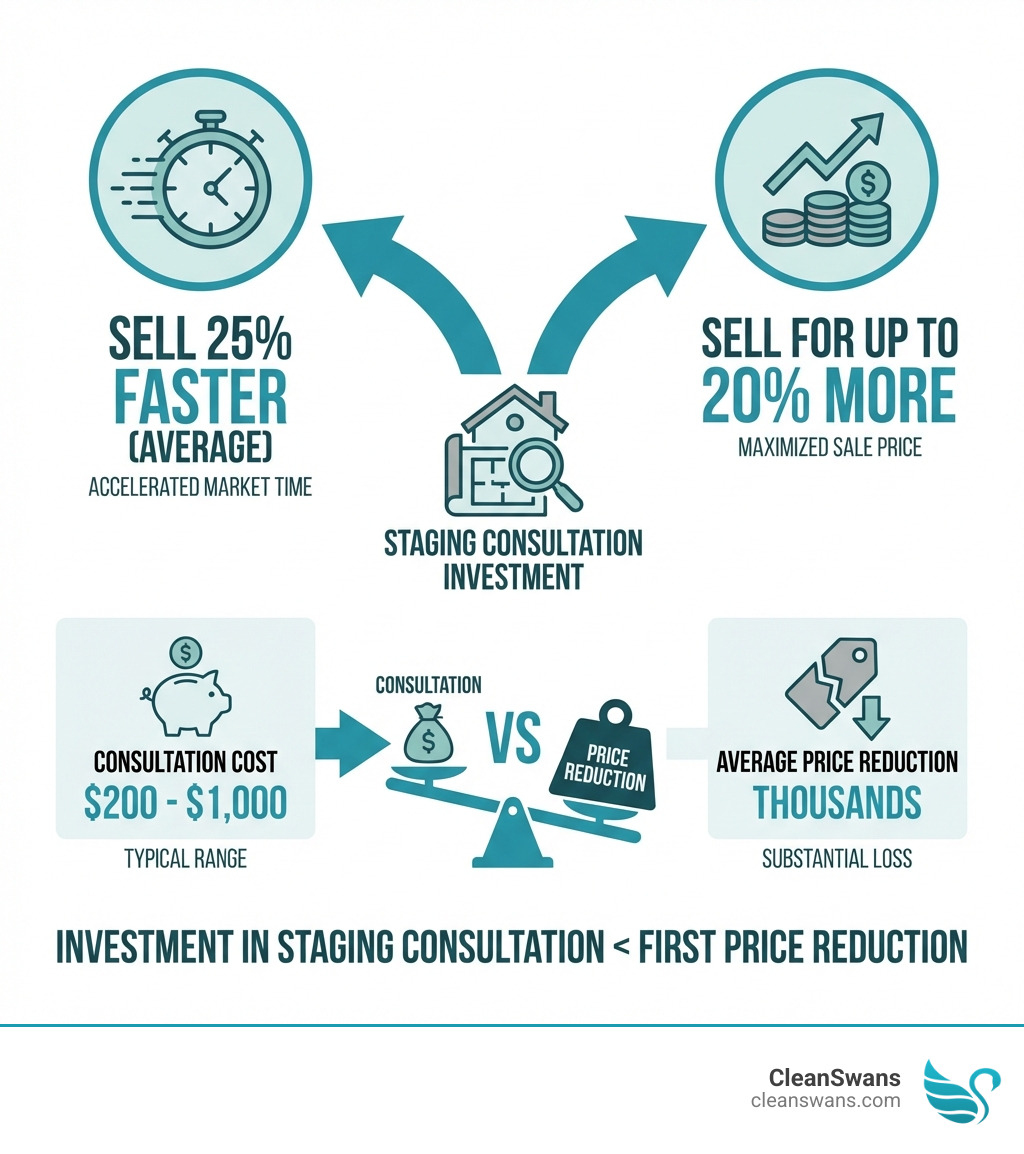
- ROI impact: Homes staged by professionals sell 25% faster and for up to 20% more than unstaged homes
When you’re preparing to list your home, the stakes are high. You want top dollar, and you want it quickly. The difference between a home that sits on the market for months and one that sparks a bidding war often comes down to one thing: strategic presentation. A home staging consultation gives you the expert playbook to make your property irresistible to buyers, typically for less than the cost of your first price reduction.
Think of it as packaging your property for its target market. Just as you wouldn’t wear the same outfit to a beach party and a board meeting, different properties appeal to different buyers. A professional stager knows exactly how to position your home to attract the right audience and trigger emotional connections that lead to offers.
As Founder of CleanSwans, I’ve worked with countless homeowners and real estate professionals to prepare luxury properties for market, and I’ve seen how a strategic home staging consultation transforms both the property and the seller’s confidence. My experience delivering white-glove service across high-end residential markets has shown me that the right preparation makes all the difference between a good sale and a great one.
The “Why” and “What”: Unpacking the Home Staging Consultation

A home staging consultation is a detailed, professional evaluation of your property through a buyer’s eyes. It’s not about personal taste; it’s about strategic marketing to create a universally appealing space. This process identifies key changes that will highlight your home’s best features, minimize its flaws, and help it stand out from the competition. The investment is almost always less than your first price reduction. The goal is to make your home shine, enticing potential buyers to envision their future within its walls.
The Tangible Benefits of a Professional Consultation
Engaging in a home staging consultation offers a multitude of benefits for sellers, ensuring your property is positioned for success in the competitive real estate market.
- Faster Sale: Homes staged by professionals sell an impressive 25% faster on average than those not staged. In a market, every day counts, and a quicker sale means less stress and fewer carrying costs for you.
- Higher Offers: Beyond speed, professional staging can lead to a significantly higher sale price. Staged homes can sell for up to 20% more than homes that haven’t received this expert touch. This translates to more money in your pocket.
- Avoiding Price Reductions: The investment in a home staging consultation is almost always less than your first price reduction. On average, price reductions can be in the thousands, making the upfront cost of a consultation a wise financial decision.
- Leveraging Buyer Psychology: Staging taps into buyer psychology, creating a positive first impression and fostering an emotional connection. Buyers often make decisions based on emotion, and a well-staged home helps them envision themselves living there, rather than just seeing a house.
- Positive First Impressions: Most potential buyers form their opinion within seconds of seeing a home. A professional consultation ensures every detail contributes to a welcoming and aspirational feel.
- Expert Guidance: You receive an actionable plan from an expert who understands current market trends and buyer preferences, saving you time and effort trying to figure it out yourself. This is why Hiring Professionals for Home Services Saves You Money in the Long Run.
Real estate agents also benefit immensely from advising their clients to undertake a home staging consultation. It equips their clients with a competitive edge, leading to faster sales and higher commissions, and ultimately improves the agent’s reputation. Real estate professionals can leverage these consultations to give listings a significant advantage.
Types of Home Staging Consultations Explained
Not all home staging consultations are created equal; they come in various formats to suit different needs and budgets. We offer flexible options to ensure you get the guidance that’s right for you. Request a quote for an In-Home or Virtual Consultation that fits your schedule and requirements.
- Walk-and-Talk Consultation: This is a popular and often more affordable option. The stager walks through your home with you, providing verbal, room-by-room recommendations. You’ll take notes, and the stager might offer immediate suggestions for furniture arrangement or decluttering. It’s a fantastic way to get expert advice you can implement yourself.
- Hands-On Consultation: Similar to a Walk-and-Talk, but with a key difference: the stager actively participates in making minor changes. For example, instead of just suggesting a different living room arrangement, they might actually move a coffee table or rearrange accessories. This often involves using handy tools like furniture sliders for easy rearranging. The homeowner or agent is typically expected to assist.
- Written Report Consultation: For those who prefer a detailed, documented plan, this consultation provides a comprehensive written report, often accompanied by photos. It’s like a home inspection report, outlining everything you need to do to prepare your home for market, including specific recommendations for paint colors, furniture placement, and repairs. These reports can be quite extensive, sometimes even up to 70 pages.
- Virtual/Online Consultation: Ideal for clients who are not in our immediate service areas (New York, New Jersey, Connecticut, Rhode Island, Massachusetts, Delaware, Maryland, Washington D.C. Metro, Virginia, North Carolina, South Carolina, Georgia, Florida) or prefer the convenience of remote guidance. After completing an online questionnaire and uploading photos of your home, a stager provides personalized recommendations via a virtual meeting. This type of consultation is particularly geared towards occupied homes with existing furnishings.
- Occupied vs. Vacant Staging: A key distinction in consultations. An occupied home staging consultation (also known as redesign) focuses on using the homeowner’s existing furniture and decor to prepare the home for sale. This is a great way to maximize your budget. In contrast, vacant staging involves bringing in new or rented furnishings for an empty home, which is a different service often following a consultation.
Staging vs. Redesign: Understanding the Key Difference
While both home staging and interior redesign involve aesthetics, their core purposes are distinctly different. Understanding this distinction is crucial when preparing your home for sale.
- Decorating to Sell (Staging): A home staging consultation is all about “decorating to sell.” The primary goal is to appeal to the widest possible range of potential buyers, enticing them to make an offer. This means creating a neutral, clean, and aspirational space. Recommendations will focus on depersonalization (removing family photos and personal items), creating broad mass appeal, and optimizing flow and function. It’s about showcasing the property’s features, not the seller’s personal style. Think of it as “packaging” a real estate property.
- Decorating to Live (Redesign): Interior redesign, on the other hand, is about “decorating to live.” It’s centered around the homeowner’s personal tastes, preferences, and lifestyle. The aim is to create a comfortable, functional, and aesthetically pleasing space for long-term enjoyment. Color schemes might be bolder, accessories more personal, and furniture arrangements custom specifically to the homeowner’s daily routines.
Staging aims to make a house feel like a model home that any buyer could imagine themselves in, while redesign makes a house feel like your home. For more information on creating beautiful spaces for living, explore our Interior Styling services.
The Consultation Process: A Step-by-Step Walkthrough

The consultation process is a structured service designed to give you a clear, actionable plan. It typically involves three phases: preparation before the visit, the on-site assessment, and the delivery of a detailed action plan. Understanding this process helps you prepare and get the most value from your stager’s expertise.
Before the Stager Arrives: The Preparation Phase
Before your stager even steps foot in your home for a home staging consultation, a significant amount of groundwork is often laid to ensure the most effective and efficient visit.
- Stager Research: A professional stager will typically research your property using online resources like MLS, Realtor.com, or Zillow. This helps them understand the home’s specifications, history, and local market context even before the consultation.
- Client Questionnaire: You’ll likely be asked to complete a client questionnaire. This helps define your goals (e.g., speed of sale vs. top dollar), your budget for improvements, and your timeline. It also allows you to share any specific preferences or concerns you might have.
- Defining Goals: Clear goals are paramount. Do you need a quick sale, or are you aiming for the absolute highest price? Your stager will tailor recommendations based on these objectives.
- Information Gathering: The stager will want to understand who the “target buyer” is for your property. Is it a young family, a single professional, or empty nesters? Knowing this helps them make recommendations that appeal directly to that demographic, considering factors like price range, location, and home configuration.
- Realtor Communication: If you’re working with a real estate agent, the stager will often communicate with them beforehand to confirm details, understand the agent’s strategy, and ensure everyone is aligned on the objectives for the property.
During the On-Site Home Staging Consultation
The on-site visit is where the magic truly begins. This is your opportunity to benefit directly from a stager’s trained eye and expertise. A typical on-site home staging consultation can take anywhere from 1 hour to a few hours, depending on the size and complexity of your home.
- The Walkthrough: The consultation usually begins outside, following the path a potential buyer would take. The stager will methodically walk through every room, opening every door and closet, assessing all areas of the property. This comprehensive tour allows them to evaluate the home from a critical “buyer’s eye” perspective.
- Buyer’s Eye Perspective: This is key. The stager isn’t looking at your home as you live in it, but as a potential buyer would perceive it. They identify aspects that are unappealing, things that might deter offers, and areas that could be improved to attract buyers.
- Room-by-Room Assessment: Expect a thorough evaluation of each space. This includes furniture placement, accessories, room focal points, balance, paint color, lighting, overall flow, and even smells and clutter. They’ll assess what needs to be packed up, what should be kept, and how to update areas like the kitchen affordably.
- Taking Photos: The stager will take photos of key rooms from multiple angles. These photos are crucial for their own reference, for creating detailed reports, and sometimes even for demonstrating before-and-after changes.
- Verbal Recommendations: During a “Walk-and-Talk” consultation, you’ll receive immediate verbal recommendations. The stager might even try out different scenarios in front of you to illustrate their thinking process. This collaborative approach allows you to ask questions and gain a deeper understanding.
Essential Tools a Stager Should Bring: To conduct a thorough consultation, a stager comes prepared with a specific toolkit:
- Tape Measure: For assessing furniture placement and room dimensions.
- Paint Deck: To suggest neutral, appealing paint colors that sell homes.
- Camera/Smartphone: For documenting the current state of the home and specific areas needing attention.
- Notepad and Pen (or Laptop): For taking detailed notes on recommendations and observations.
- Blue Painter’s Tape: Useful for marking areas or visualizing changes.
You can find many useful items for staging in our amazon store.
After the Consultation: Your Action Plan
The home staging consultation doesn’t end when the stager leaves your property. The post-consultation phase is where the actionable plan comes to life, guiding you through the necessary steps.
- Receiving the Report: If you’ve opted for a written report, this will be delivered shortly after the consultation. This detailed document serves as your roadmap, complete with specific suggestions, furniture layout diagrams, recommended paint colors, and even a shopping list.
- Prioritizing Tasks: A good stager will help you prioritize recommendations into categories: ‘Must Do’ (high impact, essential for market appeal), ‘Should Do’ (moderate impact, highly recommended), and ‘Could Do’ (nice to have, if budget and time allow). This ensures you focus your efforts where they’ll have the biggest return on investment.
- DIY vs. Hiring Professionals: You’ll decide which recommendations you’ll implement yourself and which you’ll hire professionals for. For tasks like deep cleaning, minor repairs, or painting, we can connect you with trusted resources. For example, a thorough Deep Cleaning before you stage can make a world of difference.
- Follow-Up Support: Many stagers offer follow-up support, whether it’s through email to answer clarifying questions, reviewing photos of your progress, or providing guidance on specific implementation challenges. This ongoing support ensures you feel confident throughout the staging process.
The Stager’s Playbook: Key Areas of Assessment
A professional stager assesses your home using a proven system that focuses on high-impact areas. They know what buyers look for and how to create an environment that feels spacious, bright, and welcoming. The assessment covers everything from the moment a buyer pulls up to the curb to every corner inside the house.
First Impressions Matter: The Power of Curb Appeal
Curb appeal is not just a nice-to-have; it’s absolutely critical. Most potential buyers form their first impression as soon as they drive up to your home. A poor exterior can cause them to decline viewing the interior altogether, even if they have a pre-arranged showing.
- Landscaping: Tidy, well-maintained landscaping signals care and attention to the home. This might involve trimming bushes, mowing the lawn, or adding fresh mulch.
- Front Door: A freshly painted front door instantly boosts appeal. Consider a welcoming color that complements your home’s exterior.
- House Numbers: Ensure they are modern, visible, and clean.
- Exterior Paint: Peeling or faded paint can be a major turn-off. A fresh coat, even if just on trim, can work wonders.
- Pressure Washing: Driveways, walkways, and siding can accumulate dirt and grime. Pressure washing can dramatically brighten these surfaces.
- Outdoor Lighting: Functional and attractive outdoor lighting improves safety and curb appeal, especially for evening showings.
- Welcome Mat: A clean, stylish welcome mat creates an inviting entry.
- Mailbox Condition: A dilapidated mailbox can detract from the overall impression.
A stager might suggest lawn care services or even a simple sprucing up of the front door to maximize this vital first impression.
Inside the Home: Creating an Irresistible Interior
Once inside, the stager’s focus shifts to changing your living spaces into a buyer’s dream.
- Furniture Layout: The stager will optimize furniture placement to create clear traffic flow, highlight architectural features, and make rooms appear larger and more functional.
- Decluttering: This is paramount. Excess items make a home feel small and distracting. Stagers advise on what to pack up and what to keep, ensuring surfaces are clear and closets aren’t overflowing.
- Depersonalizing: Removing personal items like family photos, unique art, or highly specific decor allows buyers to envision their lives in the home, rather than yours.
- Paint Color Psychology: Neutral, light, and airy paint colors are almost always recommended. These colors make rooms feel larger, brighter, and provide a blank canvas for buyers. The importance of wall colors when selling cannot be overstated.
- Lighting Strategy: Adequate lighting makes a home feel welcoming. This includes natural light (opening blinds), ambient lighting (overhead fixtures), and task lighting (lamps).
- Focal Points: Stagers identify and improve focal points in each room, such as a fireplace or a beautiful window view.
- Traffic Flow: Ensuring easy movement through rooms and between spaces is crucial for a comfortable and inviting feel.
- Odor Elimination: Unpleasant odors can be an instant deal-breaker. Stagers will recommend ways to eliminate pet odors, cooking smells, or mustiness. Consider our Seasonal Refresh service to ensure your home smells as good as it looks.
Maximizing Your Budget and ROI
One of the most valuable aspects of a home staging consultation is the stager’s ability to help you maximize your budget for the best possible return on investment.
- Using Existing Furniture: For occupied homes, the stager will prioritize using your existing furniture and decor. They’ll rearrange, re-purpose, and suggest minor updates to make your current items shine. This is a significant cost-saver compared to renting new furniture.
- High-Impact, Low-Cost Updates: Stagers are experts at identifying changes that offer the biggest bang for your buck. This could include affordable kitchen updates (e.g., new hardware, updated lighting), minor repairs, or a fresh coat of paint in key areas.
- Prioritizing Rooms: Not all rooms carry the same weight with buyers. Stagers will advise you to focus your budget on the most important areas, such as the living room, master bedroom, and kitchen, where buyers spend most of their time and make emotional connections.
- Rental Options: If your home is vacant, or if key pieces are missing from an occupied home, the stager can recommend rental furniture and accessories to complete the look without a large upfront purchase.
- DIY Tips: A good consultation empowers you with actionable DIY tasks. From decluttering strategies to simple accessory arrangements, you’ll learn how to implement many recommendations yourself. Tools like furniture sliders for easy rearranging can be invaluable for these tasks.
Navigating the Consultation: Costs, Mistakes, and FAQs
Understanding the practical aspects of a home staging consultation, like cost and common pitfalls, ensures a smooth and successful experience. Being prepared for the investment and open to professional advice is key to open uping your home’s full market potential.
How Much Does a Home Staging Consultation Cost?
The cost of a home staging consultation can vary, but generally, it’s a small investment that yields significant returns. A consultation can range anywhere from $200 to $1,000 (or more), depending on several factors:
- Home Size and Condition: Larger homes or those in need of more extensive recommendations will naturally take more time and thus may cost more. A property’s condition also plays a role; a very cluttered or dated home requires more assessment.
- Stager Experience: Highly experienced stagers, especially those in major cities within our service regions (like New York City, Washington D.C. Metro, or Miami), may charge higher fees reflective of their expertise and proven track record.
- Location: As mentioned, costs can be higher in major metropolitan areas compared to smaller towns.
- Type of Consultation: A basic “Walk-and-Talk” will typically be less expensive than a comprehensive “Written Report” that involves significant off-site work for documentation.
- Value vs. Cost: This is an investment. The cost of a home staging consultation is almost always less than the financial hit of your first price reduction, which can be in the thousands. It’s about proactive marketing to prevent costly delays and discounts.
- Beware of Free or Cheap Consultations: A true professional knows the value of their services. Be wary of overly cheap or free consultations, as they may be a waste of your time or provide inadequate advice that could hinder your sale.
Common Mistakes to Avoid During a Consultation
To get the most out of your home staging consultation, it’s important to avoid common pitfalls that can derail the process or limit its effectiveness.
- Being Closed to Feedback: The stager is there to provide an objective “buyer’s eye” perspective. Being defensive or resistant to their recommendations, no matter how personal they feel, can undermine the entire process. It’s about selling your home, not judging your taste.
- Overwhelming the Client (for Stagers): As stagers, we ensure we don’t overwhelm clients with too much information or push unnecessary services. Our goal is to provide clear, actionable steps that align with their goals.
- Ignoring the Budget: Be honest and transparent about your budget with your stager. If you don’t communicate your financial constraints, the stager might make recommendations that are beyond your means, leading to frustration. Conversely, for us as stagers, we always ask directly about the client’s budget and are honest if their budget won’t cover the entire project.
- Not Having a Contract: Both clients and stagers should insist on a clear contract. This ensures both parties understand the scope of work, fees, payment terms, deadlines, and dispute resolution, protecting everyone involved.
- Making Assumptions: Don’t assume the stager knows your preferences or limitations, and stagers shouldn’t assume the client’s wants. Always ask for clarification.
- Not Asking Questions: This is your opportunity to learn! If you don’t understand a recommendation or want to know the “why” behind it, ask. A good stager will explain the reasoning based on market research and buyer psychology.
Frequently Asked Questions about Home Staging Consultations
How long does a consultation take?
A typical on-site consultation lasts between 1 to 3 hours, depending on the size of your home and the type of consultation service you’ve chosen (e.g., a quick walk-and-talk versus a detailed report-based assessment).
Do I need to be present for the consultation?
It is highly recommended, especially for a “Walk-and-Talk” consultation where you’ll be taking notes. Being present allows you to ask questions and understand the reasoning behind the recommendations. For report-only services, your presence may not be mandatory, but it’s always beneficial for direct communication.
What if I can’t afford all the recommendations?
This is a common concern. A good stager will help you prioritize their recommendations into categories like ‘must-do’ (high impact) and ‘should-do’ (moderate impact) based on your budget and which changes will provide the highest return on investment. They will openly discuss what you can expect to spend and how to work within your financial plan.
Conclusion
A home staging consultation is more than just advice on decorating; it’s a strategic marketing investment that empowers you to sell your property faster and for a higher price. By viewing your home through the critical eye of a buyer, a professional stager provides an actionable roadmap to highlight its best features and create an unforgettable first impression. With the right guidance, you can confidently prepare your home for the market and achieve a successful, profitable sale. CleanSwans offers expert styling services to help you prepare your home with a touch of luxury and professionalism.
Transform your property with our expert Home Styling & Seasonal Staging services